NDIS Mental Health Service in Pakenham: How to Choose the Right Support
September 17, 2025 | Uncategorized | No Comments
If you’ve ever tried to secure the right NDIS mental health service in Pakenham for a loved one, you’ll understand that it is not just a matter of opening a list and finding the closest provider.
Every family wants the best care, but here’s the thing: not all NDIS providers offer the same level of support, and what works for one person might not work for another. That’s why knowing what to look for (and what to avoid) can save you time, stress, and disappointment.
Let’s walk through a few things that families in Pakenham should keep in mind before making that big decision.
Why the Right NDIS Mental Health Support Matters
Living with a psychosocial disability can be challenging, but with the right support, life doesn’t have to feel like a constant struggle. The right NDIS support and team can help you feel more in control, more connected, and more hopeful about the future.
It’s not just about having a plan on paper. What matters is how that support is given. Is it tailored to your needs? Do you see the same support worker on a regular basis? Do you feel heard, respected, and safe?
A trusted NDIS provider in Pakenham will take the time to get to know you, not just your diagnosis. They’ll ask questions, listen carefully, and include you and your family in every step.
What to Look for in an NDIS Mental Health Service in Pakenham
If you or a loved one is experiencing mental health challenges, choosing the right support can feel overwhelming and confusing. That’s completely normal; you’re not alone.
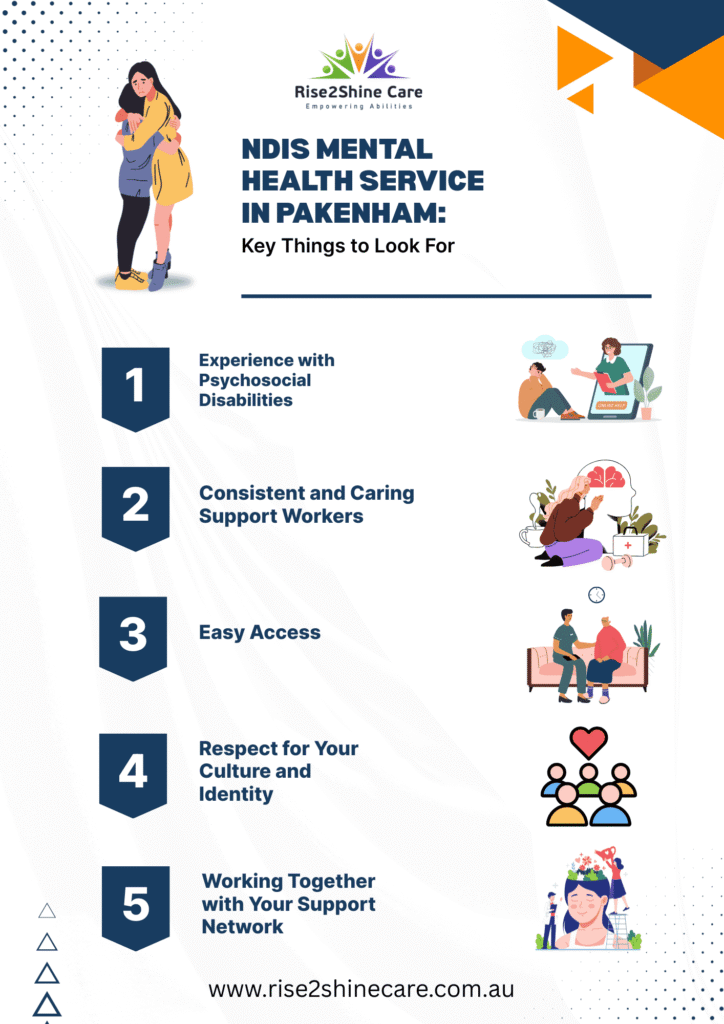
In Pakenham, with more NDIS services becoming available, making the right choice is very important. If you’re looking for NDIS support that truly works for you, here are some key things to consider:
1. Experience with Psychosocial Disabilities
Not every NDIS service provider in Pakenham specialises in mental health. Look for one that understands your needs through services like:
- Recovery coaching
- Mental health support work
- Community participation programs
- Therapeutic services
- Help with daily life skills and routines
Ask how they personalise these supports. Good providers help you make real progress in your everyday life, not just tick boxes.
2. Consistent and Caring Support Workers
Mental health support works best when you feel safe and understood. That means having support workers who stick around and get to know you.
Ask if you’ll have the same support worker regularly. Having someone familiar makes it easier to build trust and feel comfortable sharing what you need.
3. Easy Access
The psychosocial disability support must align with your life. Think about:
- Can the provider come to your home or meet somewhere easy to get to?
- Do they offer appointments outside school or work hours?
- Are their offices close to public transport?
- Do they understand local challenges in Pakenham, like transport or waitlists?
A provider who knows the area well can help you get support when and where you need it.
4. Respect for Your Culture and Identity
Your background matters. Whether you’re from a CALD community, Aboriginal or Torres Strait Islander, LGBTQ+, or something else, your provider should respect who you are.
Ask how they make their services welcoming and inclusive. A trusted NDIS provider will have clear answers and show they value diversity.
5. Working Together with Your Support Network
Good mental health support involves more than just one provider. It works best when your family, doctors, schools, or other helpers are part of the team.
Ensure that your provider will keep everyone informed and collaborate with your support network to help you achieve your goals.
Red Flags to Watch Out For When Choosing an NDIS Mental Health Support
When searching for the right NDIS mental health service in Pakenham, watch for these warning signs:
- Unclear explanation of support: If it’s hard to get a straight answer about how the service works, what’s included, or how supports are delivered, it’s a sign the provider may not be organised or transparent.
- Vague or generic responses to questions: Asking questions is important. If answers sound scripted, confusing, or avoid your concerns, you need to be cautious. A good provider will offer clear, honest answers tailored to your situation.
- No information about staff experience or qualifications: It should be easy to find out who’s delivering the support and what their background is, especially when it comes to mental health support. If that info isn’t available or is brushed off, think twice.
- Overly pushy during the first contact: Support should never feel like a sales pitch. If there’s pressure to sign service agreements quickly or book support before you feel ready, take a step back. You deserve time to decide.
- Hard to reach or slow to respond: If it takes days to get a reply, or no one picks up the phone, it may reflect how things will go later. Reliability matters, even before support begins.
- No mention of personalisation: Everyone’s mental health issue is different. If there’s no effort to learn about your goals, lifestyle, challenges, or requirements during early conversations, it’s unlikely the support will be tailored.
If you spot any of these signs, don’t hesitate to ask questions or look for another NDIS provider. The right NDIS service in Pakenham will make you feel supported and confident.
Questions to Ask Before Choosing an NDIS Mental Health Service Provider
Before signing up, it’s worth asking a few honest questions to avoid issues down the track. A reliable NDIS service provider will take the time to understand what matters to you and offer clear, thoughtful answers.
| Question to Ask | Why It Matters |
| How will you tailor support to fit my needs? | Support should match your life and goals, not just follow a generic checklist. |
| Will I have the same support worker? | Familiar faces help build trust and make support feel more stable and personal. |
| Can I make changes later if needed? | Flexibility is key, as your needs might change over time. |
| Do you work with my GP, therapist, or others? | Good support involves the whole team, so nothing gets missed or repeated. |
| How do you track progress? | It’s important to know how the provider will check if the support is working well. |
If the response to these feels rushed, vague, or unclear, it’s okay to keep looking at other options.
Conclusion
Choosing the right NDIS mental health service in Pakenham isn’t something to rush. It’s about finding a provider who listens, understands your unique needs, and supports you or your loved one throughout the process.
Remember, the best support feels safe, consistent, and personalised. Take your time, ask the important questions, and don’t be afraid to explore different options until you find the right fit.
If you are looking for a trusted NDIS service provider that specializes in mental health support in Pakenham. Rise2Shine Care is a registered NDIS provider in Pakenham and is here to help you on your journey towards better mental health and wellbeing.
Reach out to us at 0493 029 033 to book a no-pressure free consultation and learn more about us by visiting our site.
Frequently Asked Questions (FAQ)
Q1. How is NDIS mental health support different from regular mental health care?
A: NDIS support helps when your mental health condition affects everyday life. It’s more than therapy; it can include help with routines, community access, or recovery coaching.
Q2. Can I get NDIS mental health support without a diagnosis?
A: Not usually. You’ll need a diagnosis and proof that your condition impacts your daily life. A provider or support coordinator can help you gather what’s needed.
Q3. What if I didn’t like my last NDIS provider?
A: You can change anytime. You don’t need to stay with someone who doesn’t feel right. Your new provider can help with the switch.
Q4. Is mental health support automatically included in an NDIS plan?
A: No. Mental health support through the NDIS is only included if the person has a psychosocial disability, a mental health condition that significantly affects their daily life.
If your plan doesn’t already include support for this, you’ll usually need to:
- Provide evidence (like reports from a GP, psychologist, or psychiatrist)
- Show how the condition impacts your everyday activities
- Request a plan review to add psychosocial disability supports
You don’t need to figure it all out alone; an NDIS provider or support coordinator can help you with this process.
Q5. Can I still get help if I’m not sure what I need yet?
A: Yes. A good NDIS provider will listen, help you figure out your goals, and suggest supports that fit your situation.