Tag Archive : ndis mental health

/ ndis mental health

mental health service in pakenham

If you’ve ever tried to secure the right NDIS mental health service in Pakenham for a loved one, you’ll understand that it is not just a matter of opening a list and finding the closest provider.

Every family wants the best care, but here’s the thing: not all NDIS providers offer the same level of support, and what works for one person might not work for another. That’s why knowing what to look for (and what to avoid) can save you time, stress, and disappointment.

Let’s walk through a few things that families in Pakenham should keep in mind before making that big decision.

Why the Right NDIS Mental Health Support Matters

Living with a psychosocial disability can be challenging, but with the right support, life doesn’t have to feel like a constant struggle. The right NDIS support and team can help you feel more in control, more connected, and more hopeful about the future.

It’s not just about having a plan on paper. What matters is how that support is given. Is it tailored to your needs? Do you see the same support worker on a regular basis? Do you feel heard, respected, and safe?

A trusted NDIS provider in Pakenham will take the time to get to know you, not just your diagnosis. They’ll ask questions, listen carefully, and include you and your family in every step.

What to Look for in an NDIS Mental Health Service in Pakenham

If you or a loved one is experiencing mental health challenges, choosing the right support can feel overwhelming and confusing. That’s completely normal; you’re not alone.

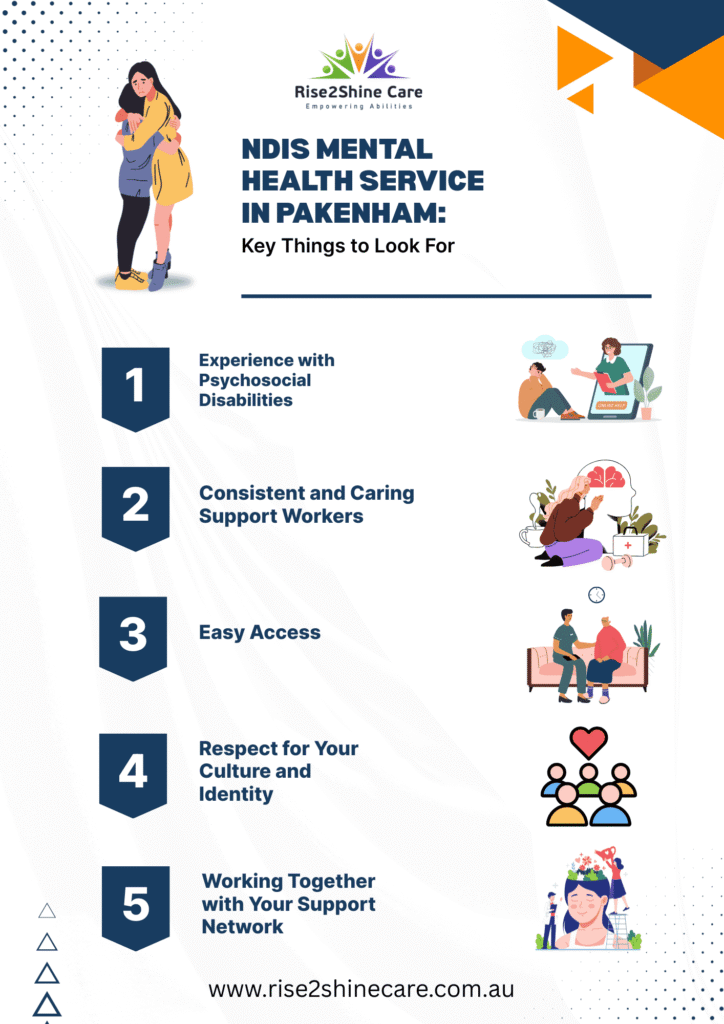
In Pakenham, with more NDIS services becoming available, making the right choice is very important. If you’re looking for NDIS support that truly works for you, here are some key things to consider:

1. Experience with Psychosocial Disabilities

Not every NDIS service provider in Pakenham specialises in mental health. Look for one that understands your needs through services like:

  • Recovery coaching
  • Mental health support work
  • Community participation programs
  • Therapeutic services
  • Help with daily life skills and routines

Ask how they personalise these supports. Good providers help you make real progress in your everyday life, not just tick boxes.

2. Consistent and Caring Support Workers

Mental health support works best when you feel safe and understood. That means having support workers who stick around and get to know you.

Ask if you’ll have the same support worker regularly. Having someone familiar makes it easier to build trust and feel comfortable sharing what you need.

3. Easy Access

The psychosocial disability support must align with your life. Think about:

  • Can the provider come to your home or meet somewhere easy to get to?
  • Do they offer appointments outside school or work hours?
  • Are their offices close to public transport?
  • Do they understand local challenges in Pakenham, like transport or waitlists?

A provider who knows the area well can help you get support when and where you need it.

4. Respect for Your Culture and Identity

Your background matters. Whether you’re from a CALD community, Aboriginal or Torres Strait Islander, LGBTQ+, or something else, your provider should respect who you are.

Ask how they make their services welcoming and inclusive. A trusted NDIS provider will have clear answers and show they value diversity.

5. Working Together with Your Support Network

Good mental health support involves more than just one provider. It works best when your family, doctors, schools, or other helpers are part of the team.

Ensure that your provider will keep everyone informed and collaborate with your support network to help you achieve your goals.
Red Flags to Watch Out For When Choosing an NDIS Mental Health Support

When searching for the right NDIS mental health service in Pakenham, watch for these warning signs:

  • Unclear explanation of support: If it’s hard to get a straight answer about how the service works, what’s included, or how supports are delivered, it’s a sign the provider may not be organised or transparent.
  • Vague or generic responses to questions: Asking questions is important. If answers sound scripted, confusing, or avoid your concerns, you need to be cautious. A good provider will offer clear, honest answers tailored to your situation.
  • No information about staff experience or qualifications: It should be easy to find out who’s delivering the support and what their background is, especially when it comes to mental health support. If that info isn’t available or is brushed off, think twice.
  • Overly pushy during the first contact: Support should never feel like a sales pitch. If there’s pressure to sign service agreements quickly or book support before you feel ready, take a step back. You deserve time to decide.
  • Hard to reach or slow to respond: If it takes days to get a reply, or no one picks up the phone, it may reflect how things will go later. Reliability matters, even before support begins.
  • No mention of personalisation: Everyone’s mental health issue is different. If there’s no effort to learn about your goals, lifestyle, challenges, or requirements during early conversations, it’s unlikely the support will be tailored.

If you spot any of these signs, don’t hesitate to ask questions or look for another NDIS provider. The right NDIS service in Pakenham will make you feel supported and confident.

Questions to Ask Before Choosing an NDIS Mental Health Service Provider

Before signing up, it’s worth asking a few honest questions to avoid issues down the track. A reliable NDIS service provider will take the time to understand what matters to you and offer clear, thoughtful answers.

Question to AskWhy It Matters
How will you tailor support to fit my needs?Support should match your life and goals, not just follow a generic checklist.
Will I have the same support worker?Familiar faces help build trust and make support feel more stable and personal.
Can I make changes later if needed?Flexibility is key, as your needs might change over time.
Do you work with my GP, therapist, or others?Good support involves the whole team, so nothing gets missed or repeated.
How do you track progress?It’s important to know how the provider will check if the support is working well.

If the response to these feels rushed, vague, or unclear, it’s okay to keep looking at other options.

Conclusion

Choosing the right NDIS mental health service in Pakenham isn’t something to rush. It’s about finding a provider who listens, understands your unique needs, and supports you or your loved one throughout the process.

Remember, the best support feels safe, consistent, and personalised. Take your time, ask the important questions, and don’t be afraid to explore different options until you find the right fit.

If you are looking for a trusted NDIS service provider that specializes in mental health support in Pakenham. Rise2Shine Care is a registered NDIS provider in Pakenham and is here to help you on your journey towards better mental health and wellbeing.

Reach out to us at 0493 029 033 to book a no-pressure free consultation and learn more about us by visiting our site.

Frequently Asked Questions (FAQ)

Q1. How is NDIS mental health support different from regular mental health care?

A: NDIS support helps when your mental health condition affects everyday life. It’s more than therapy; it can include help with routines, community access, or recovery coaching.

Q2. Can I get NDIS mental health support without a diagnosis?

A: Not usually. You’ll need a diagnosis and proof that your condition impacts your daily life. A provider or support coordinator can help you gather what’s needed.

Q3. What if I didn’t like my last NDIS provider?

A: You can change anytime. You don’t need to stay with someone who doesn’t feel right. Your new provider can help with the switch.

Q4. Is mental health support automatically included in an NDIS plan?

A: No. Mental health support through the NDIS is only included if the person has a psychosocial disability, a mental health condition that significantly affects their daily life.

If your plan doesn’t already include support for this, you’ll usually need to:

  • Provide evidence (like reports from a GP, psychologist, or psychiatrist)
  • Show how the condition impacts your everyday activities
  • Request a plan review to add psychosocial disability supports

You don’t need to figure it all out alone; an NDIS provider or support coordinator can help you with this process.

Q5. Can I still get help if I’m not sure what I need yet?

A: Yes. A good NDIS provider will listen, help you figure out your goals, and suggest supports that fit your situation.
ndis mental health support in pakenham

Whether you’re living with a mental health condition yourself or supporting someone who is, you probably understand just how deeply it can affect everyday life, from managing simple routines to staying connected with others or holding down work. In some cases, these challenges become long-term and start to impact independence and quality of life in a major way.

When that happens, it may be more than just a mental health concern- it might be what’s known as a psychosocial disability.

This kind of disability can make everyday life feel overwhelming, even unmanageable at times. And when that’s the case, people often need more than short-term treatment, they need ongoing support.

That’s where the National Disability Insurance Scheme (NDIS) comes in. It is designed to support Australians with significant and lasting disabilities including those caused by mental health conditions, the NDIS can fund a range of services to help people regain control, independence, and confidence in their daily lives.

ndis mental health support in pakenham

But understanding how it all works, especially here in Pakenham, can feel confusing. That’s why this guide exists.

Here’s what we’ll walk through together:

  • What psychosocial disability really means and how it relates to mental health
  • Who might qualify for the NDIS, and what the eligibility criteria look like
  • How to apply, and what kind of evidence is needed
  • Trusted local services in Pakenham that can help you through it
  • The types of supports the NDIS may offer for mental health

Whether you’re just starting to explore support or feeling stuck somewhere in the process, this guide is here to help you take the next step clearly, calmly, and with the local insight you need.

What is NDIS Mental Health Support in Pakenham? Understanding Psychosocial Disability

Lots of people experience mental health challenges at some point, feeling anxious before a big event, going through a tough breakup, or feeling low for a few weeks. With the right support, many people can recover and get back on track.

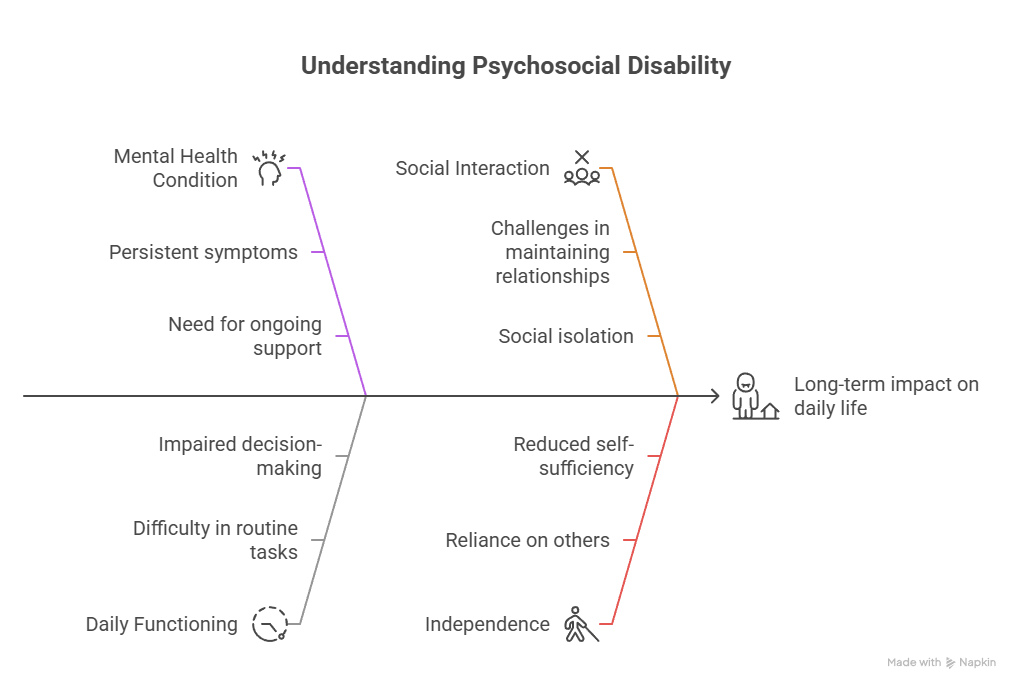
But for some, a mental health condition doesn’t just come and go, it sticks aroundfor a long time and starts to makeeveryday life really hard to manage.

That’s what’s called a psychosocial disability.

understanding psychosocial disability

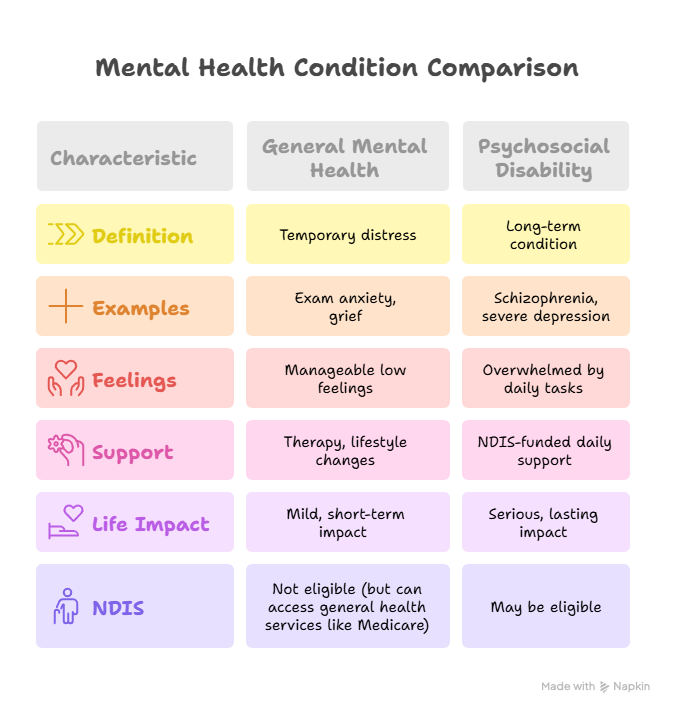
Here’s how it differs:

  • A mental health condition might make someone feel sad, anxious, or stressed for a while. They might need therapy, medication, or time off and then feel better.
  • A psychosocial disability means the condition is long-term, and it seriously affects a person’s ability to do everyday tasks such as getting dressed, going to the shops, making decisions, or keeping up with friends and family.

Overall, it is not just about the name of your condition.

It’s about how much it affects your daily functioning and your independence over time. If you or your loved one is facing such a condition, then you may be eligible for NDIS mental health support in Pakenham, so it’s worth exploring your options.

Conditions that can lead to psychosocial disability include:

  • Schizophrenia
  • Bipolar disorder
  • Severe depression
  • Anxiety disorders
  • Post-traumatic stress disorder (PTSD)

Here is a chart to simplify the difference between psychosocial disability and general mental health.

difference between general mental health and psychosocial disability

How Does the NDIS Support Psychosocial Disability?

The NDIS provides funding for supports that help individuals with psychosocial disabilities improve their functional capacity and participate more fully in their communities. The support is designed to be flexible and tailored to each individual’s needs and goals.

Some examples of NDIS-funded supports for psychosocial disability include:

1. Psychosocial Recovery Coaching:

  • A team member to help each participant develop and build the skills to manage their lives and work towards their recovery goals.

2. Capacity Building Supports:

  • This includes building skills and autonomy in areas like education, employment, or daily living tasks.

3. Social and Community Participation:

  • Supports that help participants engage with their community, form new social connections, and participate in social activities.

4. Assistance with Daily Living:

  • Assistance with daily tasks such as personal care, household chores, and meals so participants can live independently.

5. Support Coordination:

  • Help navigating the NDIS and connecting with other supports and services.

Note: The NDIS mental health support in Pakenham are intended to help people with psychosocial disabilities manage the functional impacts of their condition. This does not replace clinical mental health treatment, which is the responsibility of the broader health system.

Are You Eligible? NDIS Mental Health Eligibility Criteria for Pakenham Residents

If you’re living with a mental health condition that makes daily life difficult, the NDIS might be able to support you. But first, you’ll need to meet a few key requirements.

Here’s a quick and simple breakdown:

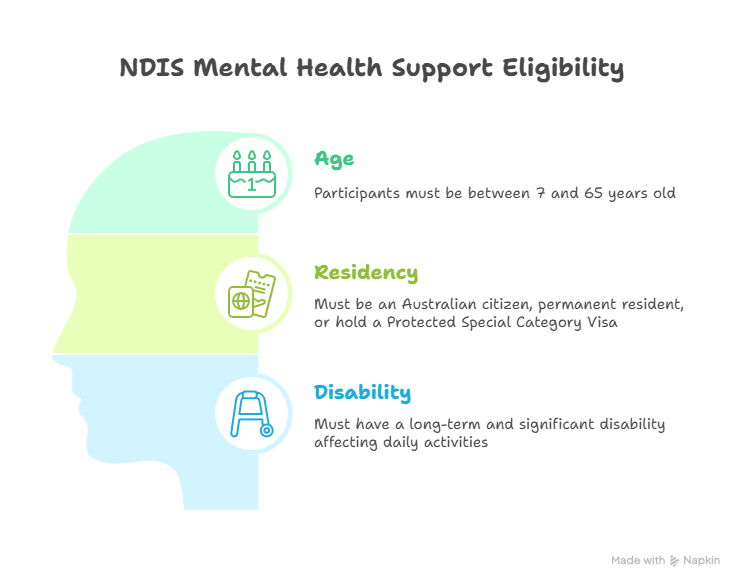
ndis support in pakenham eligibility

1.Age: You need to be between 7 and 65 years old.

  • Under 7? You may qualify for early childhood support.
  • Over 65? My Aged Care might be the right path for you.

2. Residency: You must live in Australia and be:

  • An Australian citizen,
  • Apartment resident, or
  • Hold a Protected Special Category Visa.

3. Mental Health Condition is Long-Term: Your condition needs to be ongoing and not likely to improve with current treatments. This doesn’t mean you’re not trying; it just means more support is needed.

4. You Need Support with Daily Life: Your condition must make it hard to do everyday things, like:

  • Taking care of yourself
  • Moving around
  • Communicating
  • Learning
  • Joining in work, school, or community activities
  • Managing emotions or making decisions

Even one area is enough to qualify.

What Does “Significant Impact on Daily Life” Actually Mean?

How much is your condition affecting your ability to live independently?

The focus is on six main areas of life, things we all deal with every day and see how your mental health condition is getting in the way. This includes things like talking to others, taking care of yourself, learning new things, and managing time or money.

Let’s take a quick look at these six areas and how someone with a psychosocial disability might experience challenges:

Life AreaExamples of Difficulty
CommunicationTrouble asking for help, feeling misunderstood, or avoiding conversations altogether
Social InteractionWithdrawing from people, losing friendships, feeling unsafe in groups
LearningForgetting things easily, not being able to focus or learn new tasks
MobilityFeeling trapped at home due to anxiety or panic in public spaces
Self-CareStruggling with hygiene, meals, or medication without reminders or help
Self-ManagementMissing appointments, not paying bills, or being unable to plan your day

To put it simply, if your mental health makes it hard to keep up with daily life and it’s been going on for a while, you might be living with a psychosocial disability. And that could mean you’re eligible for help through the NDIS.

How to Apply for NDIS Mental Health Support in Pakenham (Step-by-Step Guide)

So, you think you (or someone you care about) might be eligible for NDIS mental health support, and now you’re wondering, “How do I actually apply?”

Don’t worry, you’re not expected to have all the answers straight away. The application process can feel a bit overwhelming at first, especially when mental health is already hard to talk about. That’s why in this section I will walk you through it step-by-step, in a way that is easy for you to understand:

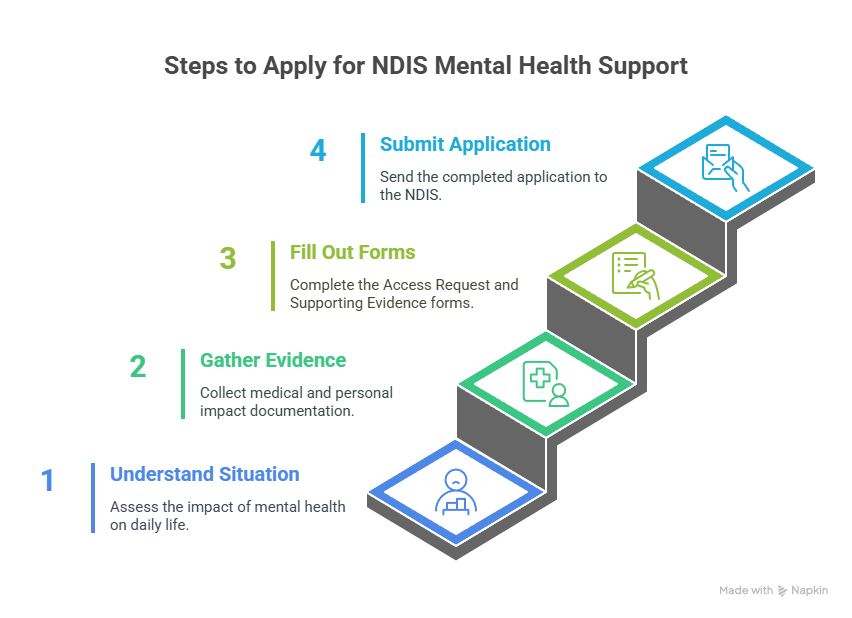
steps to apply for ndis mental health support in pakenham

Step 1: Understand Your Situation

Before filling out any form, take a moment to check in with yourself (or loved one) and ask:

  • Is this mental health condition long-term?
  • Is it interfering with daily life – not only emotionally, but practically as well?
  • Would some extra support make a difference in your independence, confidence, or routine?

If the answer is yes, you’re in the right place.

Step 2: Get Your Evidence Ready

This is one of the most important parts of your NDIS application, because the NDIS does not only need to know your diagnosis, they want to understand what your disability is doing to your life.

This is where strong evidence is important.

What Kind of Evidence Is Needed?

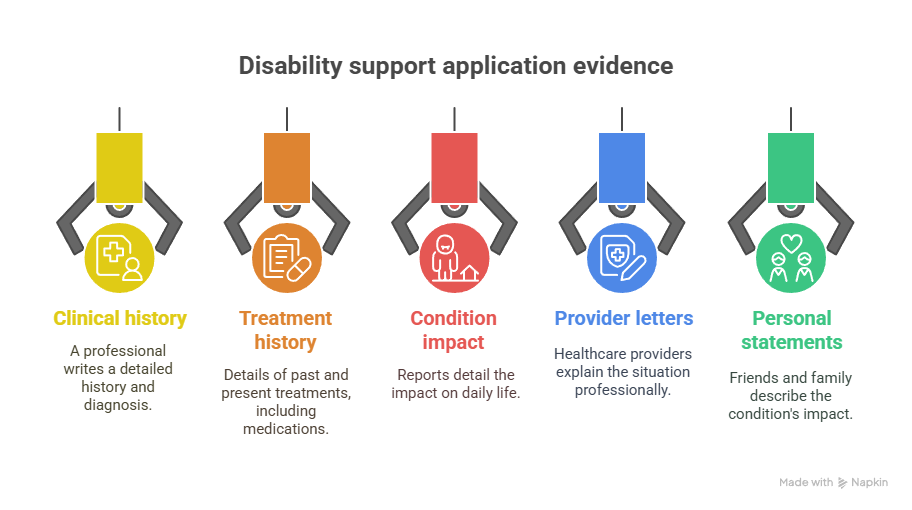
Support is usually granted based on professional documentation. This often includes:

  • A detailed clinical history and diagnosis – usually written by a psychiatrist, psychologist, or GP.
  • Your treatment history – It means past and present, including medications, therapies, and care plans. (if any)
  • Evidence of how your condition affects your daily life – reports that describe your ability to function in everyday tasks. Standardized assessments like the WHODAS 2.0 or the Life SkillsProfile, may be used.
  • Letters from your healthcare providers – these explain your situation from a professional perspective and can add weight to your application.
  • Statements from people who know you well – friends, family members, or support workers can describe how your condition affects your day-to-day life.

Who Can Help You Collect This:

  • Your local GP or mental health team
  • NDIS access support services
  • Local Area Coordinators (LACs) in Pakenham, they are trained to walk you through this process
ndis support: application evidence

Step 3: Fill Out the Forms

There are two main forms you’ll need:

  • Access Request Form (ARF) – This is your official request to join the NDIS
  • Supporting Evidence Form (SEF) – This is where your doctor or psychologist will provide details about your condition and how it affects your daily living (e.g. showering, preparing food, getting out of the house).

Pro tip: When completing these forms, remember to focus on how your condition impacts your everyday living rather than just the name of your condition.

Always be honest, even if it makes you uncomfortable. Generally, the more accurate the depiction, the better chance you have of getting the support you need.

 Step 4: Submit Your Application

You can send your completed forms and supporting documents to the NDIS by:

  • Email
  • Post
  • Online upload
  • Or drop them off at a local NDIA office

Once submitted, it can take a few weeks for the NDIS to get back to you, sometimes longer. While you wait, try to gather any extra documents that might strengthen your case in case they’re needed later.

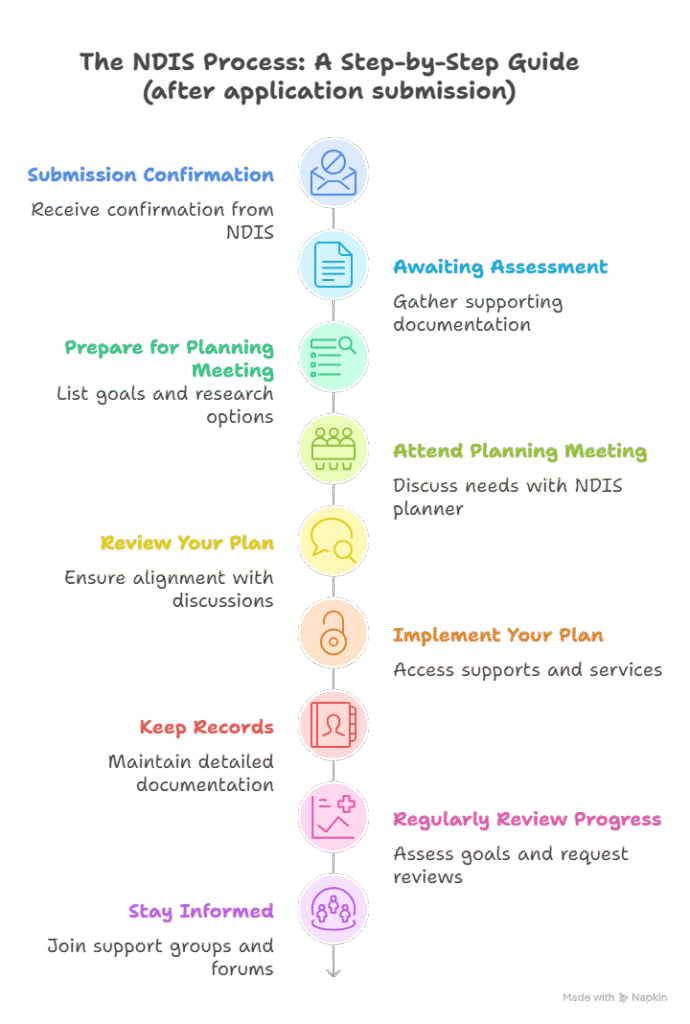
However, the process doesn’t end by application submission only, here is what you should prepare if your submission is confirmed.

ndis mental health support in pakenahm: after application submission process

NDIS Plan Example for Psychosocial Disability in Pakenham

Understanding what an NDIS plan might look like can make the whole process feel less overwhelming. While every plan is tailored to individual needs, here’s a realistic example for someone living with a psychosocial disability in Pakenham. This will help you see how goals, supports, and services fit together in a plan.

Example Participant Goals

NDIS plans are goal-oriented. For someone with a psychosocial disability, goals might include:

  1. Independent Living
    • Manage daily routines like cooking, cleaning, and personal care
    • Maintain a stable living environment
  2. Social and Community Participation
    • Attend local community groups, social clubs, or classes
    • Rebuild connections with friends and family
  3. Skill Development and Capacity Building
    • Learn strategies for coping with stress or anxiety
    • Build skills for returning to education or employment

Supports NDIS Might Fund:

  • Psychosocial Recovery Coaching
  • Community Access or Social Participation programs
  • Assistance with Daily Living or Supported Independent Living (SIL)

Tip: Think about how each support helps you achieve your goals, not just the service itself. NDIS focuses on outcomes and independence.

Local Support for Your Application Journey in Pakenham

1. Local Area Coordinator (LAC) – Latrobe Community Health Service

  • Address: 48 John Street, Pakenham VIC 3810
  • Phone: 1800 242 696
  • Email: southern.melbourneLAC@ndis.gov.au

How they can help:

A Local Area Coordinator is your first point of contact for anything relating to the NDIS. They can help you navigate the application process, help you fill out the paperwork, and once approved, they can support you in connecting with the right services and supports in your area.

2. NDIS Access Support Providers

Organizations like Neami National, EACH, ACSO, and others understand how tough this process can be. They can help:

  • Talk with you about whether you might be eligible
  • Help collect the documents and reports you need
  • Support you emotionally, because your wellbeing matters, too

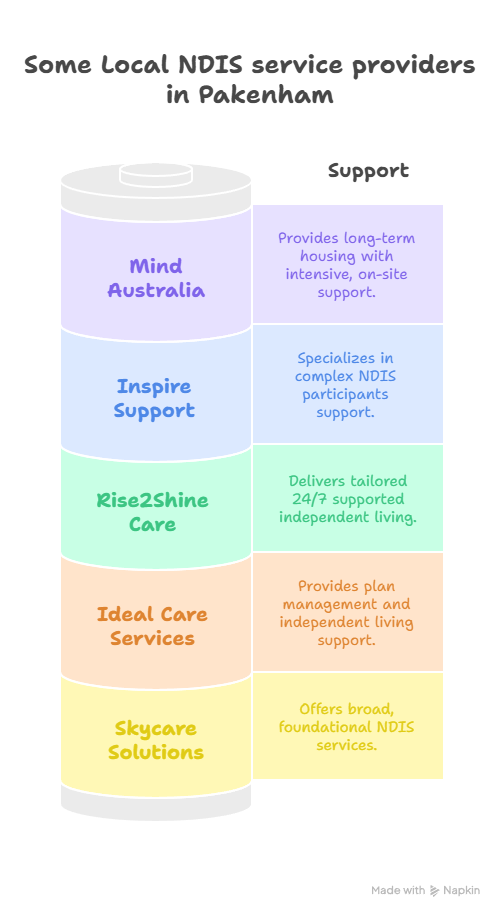
3. NDIS Service Providers in Pakenham

Look for local NDIS service providers and review everything carefully, before committing to one provider.

ndis mental health: local service provider

Common Application Challenges & How to Overcome Them

Let’s be real: applying for the NDIS with a psychosocial disability is not an easy task. Some people run into issues, but here few tips to overcome it and have a smooth journey to your NDIS plan.

ChallengeHow to Handle It
Not enough evidenceAsk your GP or psychologist to write a more detailed report -especially about how your condition affects daily life
Application deniedYou have the right to request a review and submit extra documents
Feeling overwhelmed or retraumatizedReach out to someone you trust, a support worker, or a local mental health service – your well-being matters during this process

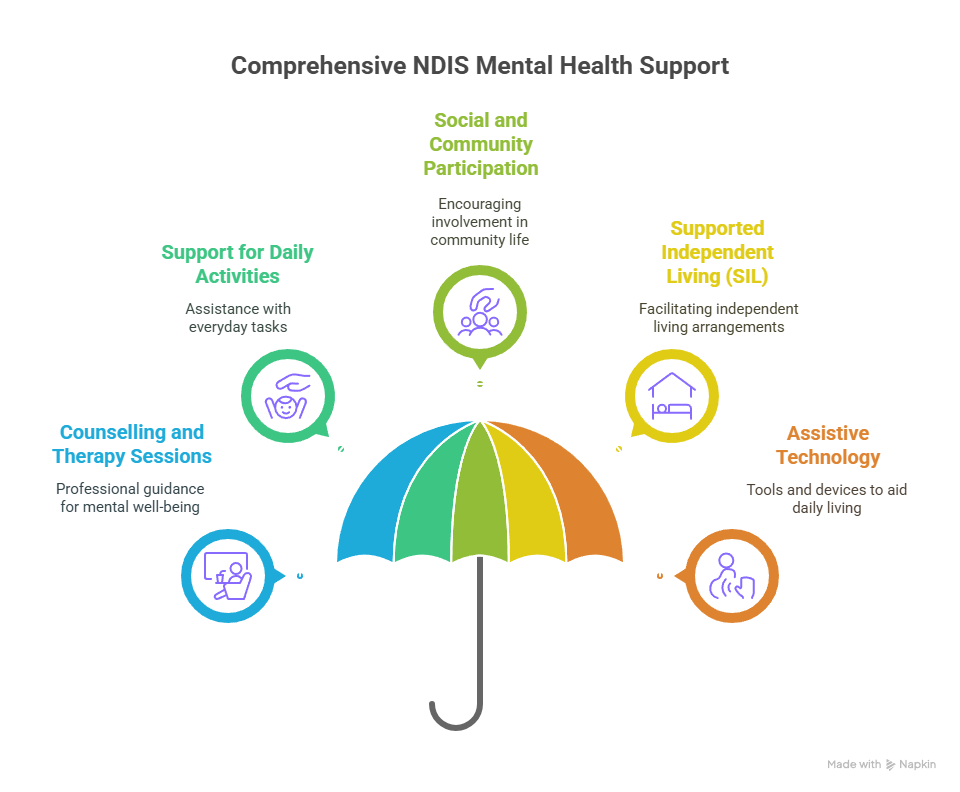
Beyond Application: What NDIS Mental Health Supports Can You Access in Pakenham?

The NDIS funds services that improve your ability to live independently and participate in society. These can include:

  • Counselling and Therapy Sessions
  • Support for Daily Activities
  • Social and Community Participation
  • Supported Independent Living (SIL)
  • Assistive Technology and more.
ndis mental health support in pakenham: comprehensive services

Some Community Support Groups in Pakenham

  • Pakenham Support Group- GROW Mental Wellbeing Program: The community offers free, confidential peer-led support for depression, anxiety, panic at grief, and diagnose mental illnesses.
  • Living and Learning Pakenham
  • Anglicare Victoria etc.

Conclusion

Navigating NDIS mental health support in Pakenham isn’t always easy, but it doesn’t have to be difficult too. Understanding your options, knowing your rights, and connecting with the right support can truly change the way you live and feel each day.

Remember, you don’t have to do it all on your own. With the NDIS and a caring network of local services and professionals, there’s real support out there, tailored to your journey, your goals, and your wellbeing.

Frequently Asked Questions (FAQs)- NDIS & Mental Health Support

Q1: Does the NDIS pay for medication or medical treatment?

A: No, the NDIS doesn’t cover things like medication, that is handled by regular health services.

Q2: Can I get funding for psychology sessions?

A: Maybe. If it’s related to a long-term mental health condition and helps you build your everyday skills or independence, it might be covered.

Q3: My mental health goes up and down, can I still qualify?

A: Yes, many people have conditions that come and go. Here, you should remember the important thing is how it affects your everyday living and not whether it is a continuous condition.

Q4: Can my family get support through my NDIS plan?

A: The NDIS focuses on the individual participant, however, they acknowledges the important role families play. Occasionally, supports like respite care for carers or capacity building or training for families is included.

Q5: Am I required to share personal trauma to obtain NDIS support?

A: No. You can choose to not go into the details of your trauma. The NDIA just needs some basic information to understand your support needs, they respect your right to privacy.