Category: NDIS SERVICES

Home / Category: NDIS SERVICES

ndis support in pakenham

If you’ve ever looked at your NDIS plan and felt a bit lost, don’t worry; you’re not alone. Many participants and families in Victoria say the same thing: the NDIS can be life-changing, but understanding what your NDIS support in Pakenham actually covers can feel overwhelming.

The great news is that once you know what each type of support does and how it can help you, using your plan becomes much easier. Let’s break down the three main types of NDIS supportCore, Capacity Building, and Capital, and how they can work together to help you reach your goals.

What Are NDIS Support Categories?

The NDIS divides funding into three main categories. Each serves a different purpose in helping you live independently and achieve your personal goals.

Here’s a quick snapshot:

  • Core Supports: Everyday assistance to make life easier
  • Capacity Building Supports: Programs and services that help you develop skills
  • Capital Supports: One-off investments in equipment or home changes that improve independence

Understanding how these categories work and complement each other is the first step to getting the most out of your plan.

Core Supports – Everyday Help That Keeps Life Moving

What Are NDIS Core Supports?

Core Supports are all about the practical stuff – the everyday help that keeps life running smoothly. Think of them as the foundation of your NDIS plan.

These supports are designed to make daily life more manageable, safe, and enjoyable. They give you the help you need for things that might feel difficult on your own, so you can focus on the parts of life you love.

How Core Supports Can Help You in Pakenham

You might use Core Supports for:

  • Personal care – showering, dressing, or grooming
  • Daily living tasks – preparing meals or keeping your home tidy
  • Transport assistance – getting to medical appointments, therapy sessions, or social activities in Pakenham
  • Community participation – joining hobby groups, sports clubs, or local events
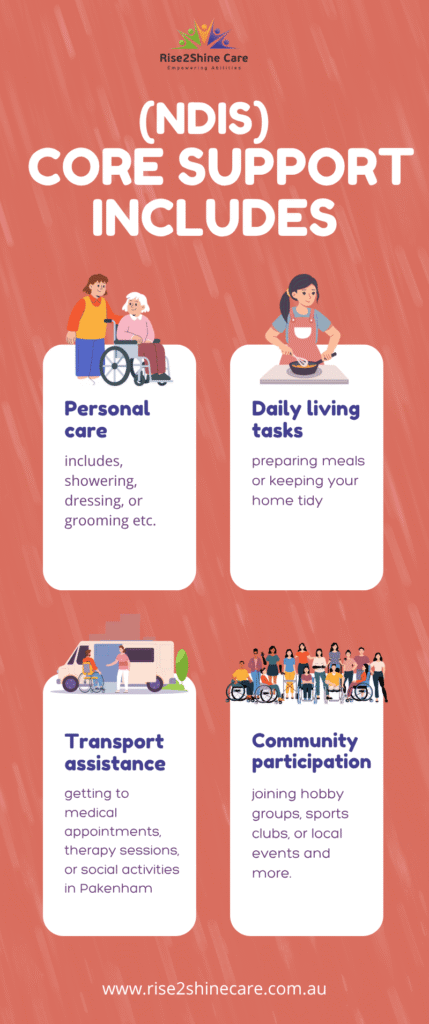
ndis support category: Core support

Tip: If you’re not sure what counts as Core Supports, start with tasks that feel physically or mentally exhausting. Chances are, that’s exactly where your Core Supports can help.

Capacity Building Supports – Grow Skills and Confidence

What Are Capacity Building Supports?

Capacity Building Supports are all about learning, developing, and gaining confidence. Unlike Core Supports, which focus on day-to-day tasks, these supports help you grow skills that make you more independent over time.

The goal is to empower you to do more for yourself, try new things, and get closer to the life you want.

How Capacity Building Supports Can Work in Your Daily Life

You could use these supports for:

  • Therapy sessions – speech therapy, occupational therapy, or psychology sessions
  • Skill development – learning to cook, budget, use public transport, or manage daily tasks
  • Employment and training – getting ready for a job or improving work-related skills
  • Social participation – joining classes or programs that improve confidence and social skills
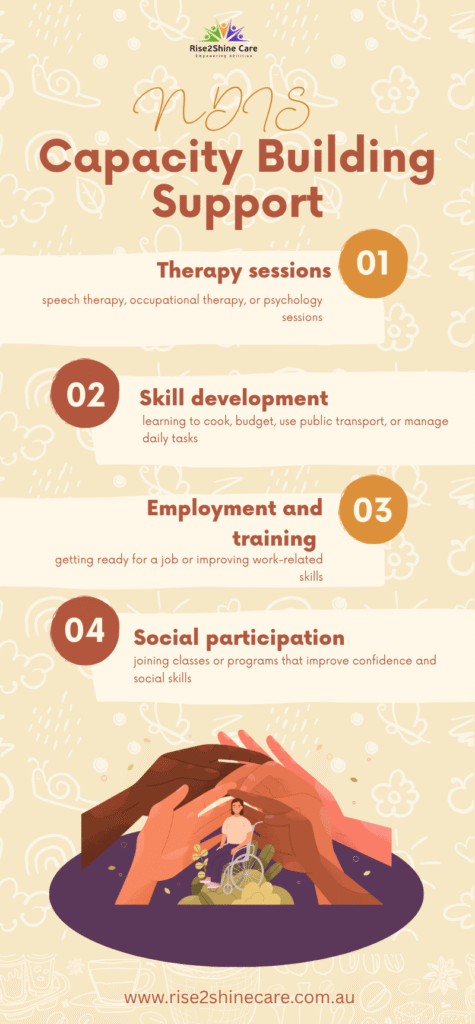
ndis support in pakenham category: capacity building support

Example:
You might attend a cooking class at a local community centre, take travel training to feel more confident using public transport, or join a local social group to improve communication and social interaction.

Tip: Break new skills into small steps, even 10–15 minutes a day counts toward growing independence.

Capital Supports – One-Off Investments for Long-Term Independence

What Are Capital Supports?

Capital Supports are the investments that make your home, tools, or equipment work for you. These are usually one-off purchases or modifications that make a big difference in your independence and quality of life.

Unlike Core or Capacity Building Supports, Capital Supports are less flexible, but they are often game-changers.

Such as:

You could use Capital Supports for:

  • Mobility aids – wheelchairs, walkers, hoists
  • Assistive technology – devices for communication or daily living
  • Home modifications – ramps, rails, bathroom changes
  • Vehicle modifications – making transport easier and safer
  • Specialist Disability Accommodation (SDA)
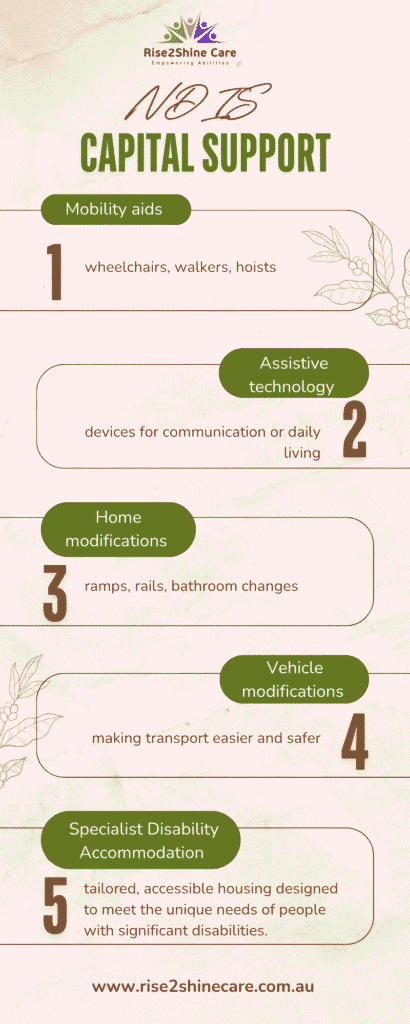
ndis support: capital support

Example: Installing grab rails in your bathroom, adding a ramp to your front door, or upgrading to a customised wheelchair can make day-to-day life safer and more comfortable.

Tip: Before investing in equipment, ask your provider if you can trial it first. This ensures it meets your specific needs.

How to Combine NDIS Supports Effectively

You don’t have to use only one category, most participants use a mix of Core, Capacity Building, and Capital Supports. Combining them makes your plan more flexible and tailored to your life.

Simple Examples:

  • Getting to appointments? Use Core Supports for transport assistance.
  • Want to learn new skills? Use Capacity Building Supports for training or therapy.
  • Need equipment or home changes? Use Capital Supports.

By combining supports, you can cover immediate needs while also investing in long-term independence. If it feels confusing, local NDIS providers can help you understand how best to allocate your NDIS funding.

How NDIS Support Services in Pakenham Can Help You

Accessing NDIS support servicesconnects you with professionals who know your community and resources.

Local providers can:

  • Explain your plan in plain language
  • Match you with supports that suit your goals
  • Coordinate therapy, skill-building, or daily assistance
  • Help with plan reviews and funding adjustments

Having support nearby can make the NDIS journey smoother and more reassuring.

Conclusion

Feeling confused at first is completely normal. The NDIS can seem complicated, but once you understand the three main categories of NDIS support in Pakenham, you can see how they fit together to help you live your best life.

  • Core Supports help you manage daily life and maintain your routine.
  • Capacity Building Supports help you learn, grow, and build confidence.
  • Capital Supports invest in tools and changes that improve your long-term independence.

Remember: your NDIS journey is unique, and with the right guidance and support, you really can achieve your goals and live life your way.

If you’re based in Pakenham and need help understanding your NDIS support, our friendly team at Rise2Shine Care is ready to guide you every step of the way.

Get in touch today at 0493 029 033 for a free no-pressure consultation and explore how we can help you make the most of your plan and live life on your terms.

FAQ

Q1. How do I know which NDIS supports I’m eligible for?

A: Eligibility depends on your goals and needs. Reviewing your plan carefully helps you understand which Core, Capacity Building, or Capital Supports apply. Local Pakenham providers can guide you to make sure you’re accessing the supports that truly fit your life.

Q2. Can I switch providers if my current support isn’t working?

A: Yes, the NDIS is flexible. If a provider isn’t meeting your expectations, you can change to another. Choosing a provider in Pakenham who understands your goals and lifestyle can make a big difference.

Q3. How can I get the most out of my NDIS plan?

A: Plan wisely by combining supports strategically. For example, Core Supports can help with everyday tasks, while Capacity Building Supports develop skills for independence. Reviewing your progress regularly ensures your plan continues to meet your evolving needs.

Q4. Are there local community programs in Pakenham that work with NDIS supports?

A: Yes! Many local groups, community centres, and recreational programs in Pakenham accept NDIS funding. These programs can help with social skills, fitness, therapy, or hobbies, making it easier to participate in community life while working towards your goals.

Q5. How do I prepare for my NDIS plan review?

A: Keep a simple record of your achievements and supports used. Note what worked well and where you need extra help. Local support coordinators in Pakenham can assist in presenting this information clearly, helping you maximise your next plan.


Life Skills Development with NDIS: A Step Toward a More Independent Future in Pakenham

NDIS Life Skills Development Service in Pakenham supports participants by offering personalised services that help them grow their independence, confidence, and ability to shine.

For people with disability, building basic life skills is an important step toward reaching personal goals, especially for gaining independence and finding a job. These skills are more than just daily tasks; they help build confidence and the ability to handle challenges.

In this blog, we’ll look at how NDIS Life Skills can make a real difference for those wanting to build independence, grow their abilities, and prepare for meaningful employment.

The Building Blocks of Independence

Life skills aren’t just about doing everyday tasks; they’re about building the confidence and independence to take control of your own life. These skills help individuals with disability feel more capable, whether they’re living at home, in shared housing, or starting a new job.

One key life skill supported through the service is:

1.      Meal Planning and Preparation

Being able to plan and cook your own meals is an important part of living independently. The service helps participants learn how to plan meals, shop for groceries, and cook healthy food. This not only supports daily living but also encourages a balanced, healthy lifestyle.

It also boosts confidence in the kitchen and helps participants feel more in control of their daily routines. Over time, these skills can lead to better health and greater Independence.

2.      Travel Training: Road Safety and Public Transport

Learning to travel safely helps you become more independent. This service supports you in:

  • Road safety – Learning how to cross streets and follow traffic rules.
  • Using public transport – Understanding how to catch buses or trains.
  • Reading timetables and routes – Knowing where to go and when.

It helps individuals travel on their own with more confidence, reducing their need for help and increasing their independence. NDIS Life Skills Development Service in Pakenhamplays an important role in providing this training to support greater freedom and mobility.

3.      Building Social Networks and Connections

Having meaningful social connections plays a big role in a person’s overall happiness and mental health. The service supports participants in developing the skills to connect with others and be part of their community.

  • Learn how to start and maintain conversations.
  • Practice joining group activities and feeling comfortable in social environments.
  • Develop skills to make friends, connect with peers, and build supportive relationships.
  • Improve confidence in social situations – at home, at work, or out in the community.

4.      Financial Management and Budgeting

Learning to manage money is a key part of becoming independent. The service helps participants manage their money and create a budget, giving them more control over their finances.

This includes:

  • setting a budget -Planning how to use your money
  • understanding expenses – Knowing what you spend money on.
  • Saving money – Learning how to set aside money for future needs or goals

This skill not only provides more control over day-to-day life but also lays the foundation for long-term financial stability.

5.      Creative Activities and Hobbies

Creative work is an important part of personal development and well-being. The service helps participants take part in creative activities like art, music, or crafts. These hobbies let individuals explore what they enjoy, build confidence, and feel happier in life.

6.      Navigating Government Agencies

Understanding how to interact with government services is essential for accessing support and benefits. The service assists participants in navigating government agencies, whether it’s understanding healthcare, housing, or disability services.

This support ensures that individuals can access the resources they need to live independently and manage their care effectively.

7.      Rent, Utility Bills, and Tenancy Management

Another important skill for independent living is knowing how to handle rental agreements and pay bills like electricity and water. The service helps participants understand things like tenancy rules, how to pay rent, and manage utility bills.

This support is very helpful for people with disability who are willing to live independently, whether in their own home or shared housing, and helps them maintain a safe and stable living environment.

The Connection to Employment and Growth

When you learn life skills such as communication, time management, and financial literacy, you are preparing not only for the demands of everyday life but also for employment.

These skills are essential for finding and maintaining employment. It does not matter if you are learning to organize your day, solve problems, or communicate more effectively; these life skills provide you with the confidence and strength to be successful in your career.

NDIS Life Skills Development Service in Pakenham assists participants to develop life skills and supports them to achieve their work and life goals.

However, personal development does not finish after employment. As you develop new skills, you also build your self-belief and sense of ability. This increase in confidence can create greater participation in the community, increased social opportunities, and a highly productive and satisfying life.

How the Service Works

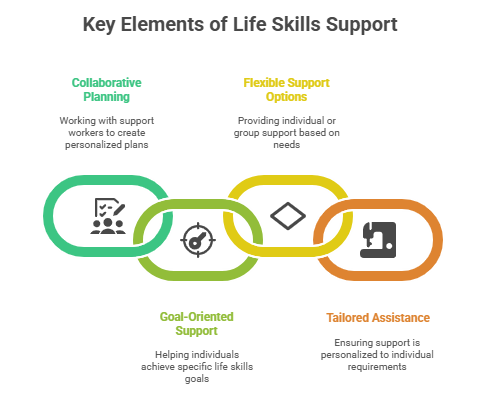
The Pakenham NDIS Life Skills Development Service is all about working together to help you reach your personal goals. The support team will work with you to create a plan that fits your needs and preferences. Here’s how it works:

  • Working Together: You’ll team up with a support worker to figure out your goals and create a plan that works for you.
  • Focused on Your Goals: Whether it’s learning how to manage money, plan meals, or use public transport, the service helps you take small steps towards your goals.
  • One-on-One or Group Support: You can get help either individually or in a group, depending on what works best for you.
  • Personalized Support: The service makes sure the support you get is tailored to your needs, so you’re getting the help that’s right for you.

Frequently Asked Questions (FAQs)

1. What is the Life Skills Development Service?
It’s a support service that helps NDIS participants build everyday skills like cooking, budgeting, travel, and communication to live more independently.

2. Who can use this service?
NDIS participants in Pakenham who want to build life skills for greater independence and future employment.

3. What kind of skills are taught?
Skills include meal preparation, money management, travel training, social skills, using public services, and managing housing and bills.

4. Is the support one-on-one or in groups?
Both options are available. Support is personalised based on your needs and goals.

5. How does this help with employment?
By learning practical skills like time management, communication, and problem-solving, participants become better prepared to enter and stay in the workforce.

6. How do I choose a good provider?
Look for a provider with experience, personalised support options, and positive reviews from other participants. Reading reviews can give you a good idea of the provider’s reputation and the quality of their services.

Conclusion

Life skills are key to becoming more independent, growing as a person, and finding success at work. Learning things like cooking, managing money, and building social connections helps people with disability feel more confident and in control of their daily lives. These skills also create more chances to grow, get involved in the community, and move forward in your career.

Whether you’re just starting or building on what you already know, NDIS Life Skills Development Service in Pakenham gives you the support and tools you need to reach your goals. With the right help, you can shape your future and take confident steps toward a more independent and fulfilling life.

Disability support worker helping person with cooking at home

Assistance with daily living under the NDIS changes lives for Pakenham locals. Around 4.4 million Australians are living with some form of disability, making tailored support a massive need in every community. Most people think support just covers the basics like cleaning and meals, but the real impact is about building independence and helping people not just get by, but actually thrive — even long term.

Table of Contents

Quick Summary

Takeaway Explanation
Daily living support is highly personalized Each participant’s needs are different, requiring tailored assistance to enhance independence and quality of life.
NDIS funding covers multiple support categories Funding includes personal care, household management, community participation, and skill development, tailored to individual circumstances.
Choose a provider that prioritizes person-centred services Effective disability support should focus on individual goals and specific support needs tailored to participants’ lives.
Long-term support benefits health and independence Ongoing assistance helps prevent secondary health issues, promotes overall well-being, and enhances personal autonomy over time.
Engagement with community is crucial Long-term strategies should encourage social connections and active community participation for improved quality of life.

Understanding Assistance With Daily Living

Assistance with daily living represents a critical support system for individuals with disabilities, helping them maintain independence and improve their quality of life. The National Disability Insurance Scheme (NDIS) provides comprehensive support designed to empower participants in managing everyday tasks and personal care needs.

What Constitutes Daily Living Support

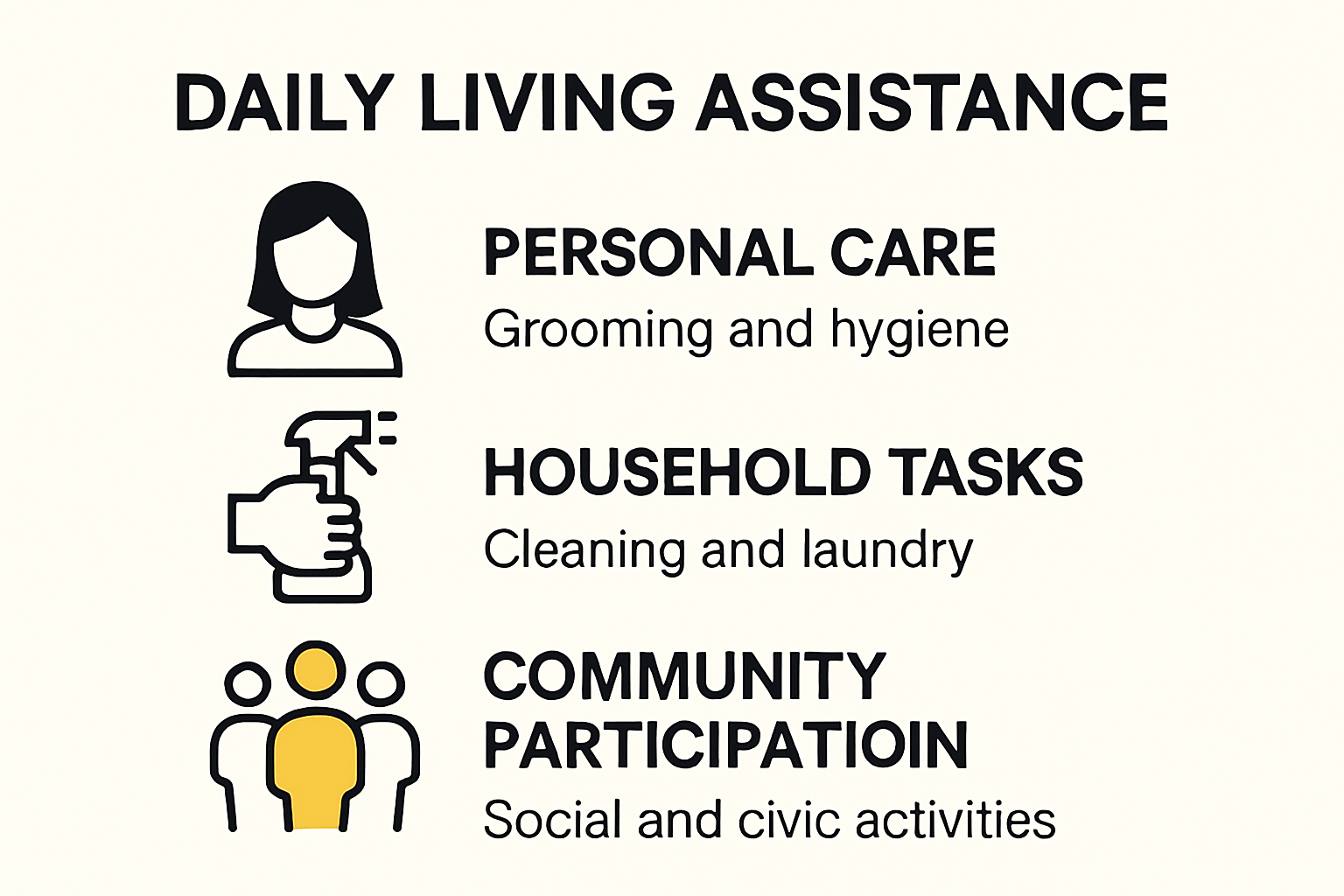
Daily living assistance encompasses a wide range of personalised support services tailored to individual requirements. According to the National Disability Insurance Agency, these services typically include help with personal care, household tasks, community participation, and skill development. These supports are not about replacing an individual’s capabilities but enhancing their ability to perform tasks independently.

Infographic showing types of daily living assistance

Support can vary significantly between participants. For someone with a physical disability, this might mean assistance with mobility, personal hygiene, or meal preparation. For individuals with cognitive disabilities, support could involve developing life skills, managing daily routines, or learning communication strategies. Research from the Australian Institute of Health and Welfare indicates that approximately 4.4 million Australians live with some form of disability, highlighting the critical importance of personalised daily living support.

Support worker helping person plan daily routine on tablet

The Personalised Nature of Support

The key principle of assistance with daily living is personalisation. Each individual’s support plan is unique, reflecting their specific needs, goals, and circumstances. This approach ensures that participants receive targeted help that genuinely improves their daily experiences. Check out our comprehensive guide on personalised daily support to understand how we tailor our services.

For Pakenham residents, this means working closely with NDIS planners and support coordinators to develop a plan that addresses individual challenges. Whether it’s help with cooking, cleaning, personal care, or transportation, the goal remains consistent: to promote maximum independence and participation in community life.

Understanding assistance with daily living is not just about managing tasks but about empowering individuals to live fulfilling, self-directed lives. It represents a collaborative approach where participants, their families, and support providers work together to create meaningful, achievable goals that enhance overall quality of life.

Here is a summary table outlining key examples of daily living support services, as mentioned in this section:

Type of Support Examples
Personal Care Bathing, dressing, meal preparation
Household Management Cleaning, shopping, maintaining living spaces
Community Participation Social interactions, community engagement
Skill Development Life skills, communication strategies, managing routines
Mobility Assistance Help with moving around, transport to activities

NDIS Funding for Daily Living Support

NDIS funding for daily living support provides a critical financial framework that enables individuals with disabilities to access personalised assistance tailored to their unique needs. Understanding the nuanced approach to funding is essential for participants seeking comprehensive support in Pakenham and across Victoria.

Funding Categories and Allocation

The National Disability Insurance Agency (NDIA) structures funding for daily living support across multiple categories, each designed to address specific participant requirements. According to the Australian National Audit Office, in 2021-2022, approximately 55% of NDIS participants aged seven or older included Assistance with Daily Life (ADL) supports in their plans, with an average annual value of $96,996 per participant.

Funding typically encompasses several key support domains:

  • Personal Care Support: Assistance with daily personal activities like bathing, dressing, and meal preparation
  • Household Management: Help with cleaning, shopping, and maintaining living spaces
  • Community Participation: Support for social interactions, skill development, and community engagement
  • Capacity Building: Interventions aimed at enhancing independent living skills

Below is a table summarising key NDIS funding statistics and categories mentioned in this section:

Statistic/Category Details
% of NDIS participants (age 7+) with ADL supports 55% (2021-2022)
Avg. annual value of ADL supports per participant $96,996 (2021-2022)
Personal Care Support Bathing, dressing, meal preparation
Household Management Cleaning, shopping, maintaining living spaces
Community Participation Social interaction, skill development, community engagement
Capacity Building Enhancing independent living skills

Individualised Funding Approach

The NDIS employs a highly personalised funding model that recognizes the diverse needs of participants. Research from the NDIS emphasizes an evidence-based approach to funding allocation, ensuring that supports are tailored to individual goals and circumstances. This means funding is not a one-size-fits-all solution but a flexible mechanism designed to address specific disability-related challenges.

For Pakenham residents, this translates to a funding strategy that considers factors such as:

  • Severity and nature of disability
  • Individual support requirements
  • Potential for skill development and increased independence
  • Long-term personal and professional goals

Participants can access detailed information about their potential supports through our comprehensive guide to daily living services, which breaks down the funding process and potential support options.

It is crucial to understand that NDIS funding for daily living support is not meant to replace existing community or family support but to complement and enhance existing care networks. The ultimate goal remains empowering participants to achieve greater independence, improve quality of life, and participate more fully in community activities.

Navigating the intricacies of NDIS funding can seem complex, but with proper guidance and understanding, participants can unlock a world of personalized support designed to meet their unique needs and aspirations.

Choosing the Best Disability Support in Pakenham

Selecting the right disability support service is a critical decision that can significantly impact an individual’s quality of life, independence, and personal growth. For Pakenham residents navigating the National Disability Insurance Scheme (NDIS), understanding the key factors in choosing a disability support provider is essential.

Evaluating Support Provider Capabilities

Choosing an effective disability support provider requires a comprehensive assessment of their expertise, approach, and alignment with individual needs. According to research from the National Academies of Sciences, Engineering, and Medicine, effective disability services should prioritize personalized, evidence-based interventions that actively engage participants and their families.

Key considerations when selecting a disability support provider include:

  • Specialization and Experience: Look for providers with demonstrated expertise in specific disability types and support needs
  • Staff Qualifications: Verify professional credentials, training, and ongoing professional development
  • Person-Centered Approach: Ensure the provider values individual goals, preferences, and autonomy
  • Comprehensive Service Range: Assess the breadth of support services offered

Personalised Support Assessment

The Commonwealth Fund’s research on disability support systems emphasizes the importance of person-centered planning. For Pakenham residents, this means finding a provider that goes beyond generic support and creates tailored strategies addressing unique personal circumstances.

Consider scheduling initial consultations with potential providers to:

  • Discuss specific support requirements
  • Understand their approach to individualized care
  • Evaluate their communication and collaboration methods
  • Explore how they develop and adapt support plans

When searching for the most suitable support, explore our comprehensive guide to selecting the right NDIS service provider to gain deeper insights into making an informed decision.

Effective disability support is more than a service. It is a partnership that empowers individuals to achieve their personal goals, enhance independence, and participate fully in community life. By carefully evaluating potential providers and prioritizing personalized, holistic support, Pakenham residents can find a disability support service that truly meets their unique needs and aspirations.

Long-Term Benefits for Permanent Disabilities

Long-term support for individuals with permanent disabilities represents a critical aspect of maintaining quality of life, independence, and personal dignity. The National Disability Insurance Scheme (NDIS) provides a comprehensive framework designed to address the unique and evolving needs of participants with permanent and significant disabilities.

Health and Wellness Outcomes

Research published in PubMed demonstrates that adequate personal assistance with daily living activities significantly improves both physical and mental health for individuals with severe disabilities. For people with permanent disabilities, consistent and tailored support can prevent secondary health complications and promote overall well-being.

The long-term benefits extend beyond immediate medical considerations and encompass multiple dimensions of health:

  • Physical Health Maintenance: Preventing secondary medical conditions through consistent care
  • Mental Health Support: Reducing isolation and enhancing psychological resilience
  • Preventative Care: Minimizing potential health risks associated with disability
  • Comprehensive Wellness Management: Holistic approach to individual health needs

Independence and Quality of Life

The Commonwealth Fund’s research highlights the critical importance of integrating long-term services with comprehensive care strategies. For Pakenham residents with permanent disabilities, this means developing support mechanisms that progressively enhance personal autonomy and community participation.

A detailed study on home-based rehabilitation revealed significant improvements in participants’ balance, autonomy, and overall quality of life through sustained assistance. This underscores the transformative potential of well-designed, person-centered disability support.

Key strategies for maximizing long-term benefits include:

  • Regularly reassessing and adapting support plans
  • Focusing on skill development and capacity building
  • Encouraging social and community engagement
  • Supporting personal growth and individual aspirations

Learn more about our personalised long-term support approach and how we help individuals with permanent disabilities achieve their potential.

Ultimately, long-term support for permanent disabilities is about more than managing challenges. It is about creating opportunities, fostering independence, and empowering individuals to lead fulfilling, meaningful lives. By recognizing each person’s unique strengths and potential, we can transform disability support from a mere service into a pathway for personal achievement and community inclusion.

Frequently Asked Questions

What is assistance with daily living under the NDIS?

Assistance with daily living under the NDIS refers to personalized support services that help individuals with disabilities manage daily tasks and enhance their independence. This can include personal care, household management, community participation, and skill development.

How does NDIS funding work for daily living support?

NDIS funding for daily living support is structured across multiple categories tailored to individual needs. It covers areas like personal care, household tasks, and community engagement, with funding reflecting each participant’s specific requirements and circumstances.

How can I choose the best disability support provider in Pakenham?

To select the best disability support provider, evaluate their expertise, staff qualifications, person-centred approach, and the range of services they offer. Consultations with potential providers can also help assess their suitability for your specific support needs.

What are the long-term benefits of assistance with daily living for permanent disabilities?

The long-term benefits of assistance with daily living include improved physical and mental health, enhanced independence, and a higher quality of life. Ongoing support can prevent health complications and promote personal autonomy and community participation.

Transform Your Daily Living With Local NDIS Care Experts

Struggling to find reliable, personalised daily living support in Pakenham can leave you feeling isolated and unsure about your options. The article highlighted the challenge of needing more than basic help, especially when it comes to meaningful assistance that actually builds independence, health and community connection. Whether you are seeking tailored care plans or ongoing everyday support, your goals and comfort deserve the highest priority.

https://rise2shinecare.com.au

Ready to move beyond the basics and experience truly person-centred assistance with daily living? Connect with the team at Rise2Shine Care for expert NDIS services right here in Pakenham. Take the first step with a free consultation and discover how we develop custom care solutions designed just for you. For additional options and resources, explore our Uncategorized – Rise 2 Shine section. Now is your moment to secure personalised NDIS support that matches your life. Contact us today and rediscover the confidence to thrive every day.

Article generated by BabyLoveGrowth

Person with disability meeting employment specialist in bright supportive office

Disability employment services in Pakenham are reshaping the way locals with disabilities access real career opportunities. Most people think finding a job with a disability is near impossible and maybe only a handful ever get real support. But the truth is, NDIS providers here have built a network so strong that customised approaches now lead to better job matching and long term roles for more than 65 percent of participants. This isn’t about ticking boxes. It is about helping people actually build their independence and future.

Table of Contents

Quick Summary

Takeaway Explanation
Disability employment services promote career independence. These services provide tailored support to help individuals with disabilities achieve meaningful work and personal growth.
NDIS providers offer holistic employment frameworks. NDIS providers in Pakenham create customized employment pathways that consider individual skills and local business needs.
Customized employment matches skills to roles. Tailored approaches focus on aligning individual capabilities with specific job requirements for long-term success.
Mental health services support workplace integration. Specialized programs provide comprehensive mental health assessments and strategies to foster inclusive work environments.
Ongoing support ensures sustainable employment. Continuous assistance from service providers helps individuals maintain employment and adapt to workplace challenges.

Understanding Disability Employment Services

Disability employment services represent a critical pathway for individuals with disabilities to achieve meaningful workforce participation and professional independence. These specialized support systems go beyond traditional job placement, offering comprehensive assistance that addresses the unique challenges faced by people with diverse abilities.

Infographic showing stages of disability employment services support process.

The Core Purpose of Disability Employment Services

At their fundamental level, disability employment services aim to bridge the gap between individual capabilities and workplace opportunities. Learn more about our comprehensive support approach designed to empower individuals with disabilities. These services recognize that employment is not just about finding a job, but creating sustainable career pathways that honor an individual’s skills, interests, and potential.

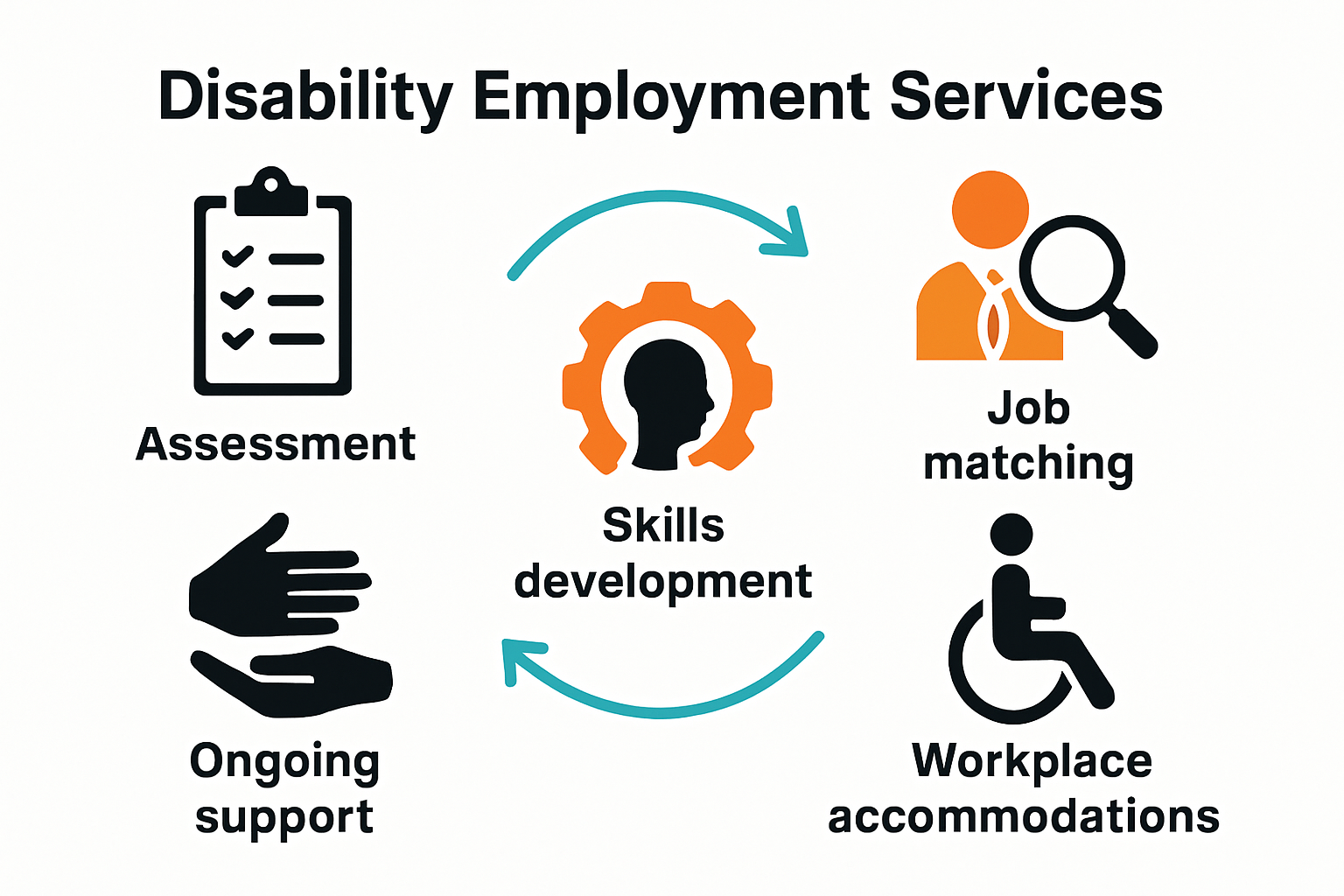
According to the National Institutes of Health research, employment plays a crucial role in social inclusion and personal development for individuals with disabilities. The services typically encompass several key components including skills assessment, vocational training, job matching, workplace adaptation, and ongoing support to ensure successful long term employment.

Holistic Support Mechanisms

Disability employment services operate through a multifaceted approach that considers both individual needs and employer requirements. This involves:

  • Personalized Career Counseling: Identifying individual strengths, interests, and potential career trajectories
  • Skills Development: Targeted training programs that enhance employability
  • Workplace Accommodations: Strategies to modify work environments and processes
  • Employer Education: Supporting businesses to understand the value of inclusive hiring practices

Under the National Disability Insurance Scheme (NDIS), these services are designed to be flexible and responsive. The U.S. Department of Labor’s Office of Disability Employment Policy highlights that effective disability employment services require a collaborative approach between service providers, individuals, and potential employers.

In Pakenham, these services are tailored to local employment landscapes, recognizing the specific economic contexts and opportunities available. The goal is not just employment, but meaningful engagement that allows individuals to contribute their unique talents and perspectives to the workforce.

Understanding disability employment services means recognizing them as dynamic, person centered support systems. They are not about fixing perceived limitations, but about creating environments where diverse abilities can flourish and professional aspirations can be realized.

By providing comprehensive, individualized support, these services transform employment from a challenge into an opportunity for personal growth, economic independence, and social participation.

Here is a summary table outlining the key components and approaches of disability employment services as described above:

Component Description
Personalized Career Counseling Identifies strengths, interests, and potential career pathways for each individual
Skills Development Delivers targeted training to improve employability
Workplace Accommodations Modifies environments and processes to suit individual capabilities
Employer Education Guides businesses in inclusive hiring and valuing diverse abilities
Vocational Training Prepares participants for specific jobs through practical skill building
Job Matching Aligns individual skills and interests with suitable job roles
Ongoing Support Offers continuous guidance and assistance for sustainable employment

NDIS Providers Supporting Job Seekers in Pakenham

In the Pakenham region, NDIS providers play a crucial role in supporting job seekers with disabilities by offering specialized employment services that address individual needs and career aspirations. Explore our tailored support solutions designed to empower individuals in their professional journey.

Comprehensive Employment Support Framework

NDIS providers in Pakenham operate through a nuanced approach that goes beyond traditional job placement. According to the NDIS Provider Finder tool, registered providers offer a range of targeted services that help participants navigate the complex landscape of employment opportunities.

These services typically include:

  • Individual Assessment: Detailed evaluation of skills, interests, and potential career pathways
  • Vocational Guidance: Personalized career counseling and strategic planning
  • Skill Development: Targeted training programs addressing specific workplace requirements
  • Ongoing Support: Continuous monitoring and assistance to ensure sustainable employment

Localized Employment Strategies

The APM Employment Services in Pakenham demonstrates how specialized providers approach disability employment. Their model focuses on understanding local economic contexts, connecting job seekers with employers who value diverse talents and providing comprehensive support throughout the employment journey.

NDIS providers recognize that successful employment for individuals with disabilities requires more than just job matching. It demands a holistic approach that considers individual capabilities, workplace adaptations, and ongoing professional development.

In Pakenham, these providers work closely with local businesses to create inclusive work environments. They help employers understand the unique strengths individuals with disabilities bring to the workforce, challenging traditional perceptions and promoting genuine workplace diversity.

The support extends beyond initial job placement. NDIS providers offer continued assistance to both employees and employers, ensuring smooth integration and long term success. This might include workplace modifications, communication strategies, and periodic check ins to address any emerging challenges.

New employee with disability welcomed by employer and NDIS provider in accessible workplace

Ultimately, NDIS providers in Pakenham are not just facilitating employment they are transforming professional landscapes. By championing individual potential and challenging systemic barriers, they create pathways for meaningful career development and economic independence for people with disabilities.

Tailored Employment Support for Long Term Disabilities

Employment support for individuals with long term disabilities requires a sophisticated and personalized approach that recognizes the unique challenges and strengths of each participant. Discover our personalized employment strategies that adapt to individual needs and career aspirations.

Customized Employment Approaches

According to the U.S. Department of Labor’s Office of Disability Employment Policy, customized employment represents a transformative strategy for supporting individuals with long term disabilities. This approach moves beyond traditional job placement by creating tailored employment solutions that match an individual’s specific capabilities with workplace requirements.

The systematic review published in BMJ Open provides compelling evidence that supported employment models significantly improve competitive employment outcomes for individuals with long term health conditions. These models focus on:

  • Individual Skills Mapping: Comprehensive assessment of unique strengths and potential
  • Job Role Customization: Designing roles that leverage individual capabilities
  • Ongoing Workplace Support: Continuous guidance and adaptation strategies
  • Employer Collaboration: Building understanding and inclusive workplace environments

Sustained Employment Strategies

The California Department of Rehabilitation’s approach demonstrates the effectiveness of robust support mechanisms. Their Supported Employment Program highlights that successful long term employment for individuals with disabilities requires more than initial job placement it demands continuous skill development, workplace integration, and responsive support systems.

In Pakenham, tailored employment support recognizes that disabilities do not define an individual’s professional potential. Instead, these services focus on creating meaningful employment pathways that honor individual talents, accommodate specific needs, and promote professional growth.

Key strategies include developing flexible work arrangements, providing assistive technologies, implementing workplace modifications, and offering ongoing coaching. These approaches ensure that individuals with long term disabilities can not only enter the workforce but also build sustainable, fulfilling careers.

Moreover, these tailored support services extend beyond the individual. They work closely with employers to create inclusive cultures that value diversity, understand accommodation needs, and recognize the unique perspectives that employees with disabilities bring to professional environments.

Ultimately, tailored employment support for long term disabilities is about transforming limitations into opportunities. By focusing on individual strengths, providing comprehensive support, and challenging traditional workplace paradigms, these services enable individuals to achieve meaningful professional engagement and economic independence.

The following table summarises the strategies and elements involved in tailored employment support for individuals with long term disabilities:

Strategy/Element Purpose/Benefit
Individual Skills Mapping Identifies unique strengths and professional potential
Job Role Customization Creates roles that align with individual capabilities
Ongoing Workplace Support Ensures sustained employment through continuous adaptation and guidance
Employer Collaboration Encourages inclusive environments and workplace understanding
Flexible Work Arrangements Accommodates diverse abilities and changing needs
Assistive Technologies Supports specific requirements to enhance workplace participation
Ongoing Coaching Provides skill development and confidence building
Workplace Modifications Removes physical or structural barriers to employment

Accessing Mental Health Employment Services in Pakenham

Mental health employment services in Pakenham represent a critical support network for individuals navigating professional challenges associated with mental health conditions. Explore our comprehensive mental health support pathways designed to empower individuals in their career journeys.

Holistic Mental Health Employment Support

The Victorian Government’s Mental Health and Wellbeing Connect centers provide essential resources for individuals seeking employment support. These services recognize that mental health challenges require nuanced, personalized approaches to professional development and workplace integration.

Key components of mental health employment services include:

  • Comprehensive Mental Health Assessment: Understanding individual strengths and potential barriers
  • Tailored Career Counseling: Developing strategies that align with mental health management
  • Workplace Accommodation Planning: Creating supportive employment environments
  • Ongoing Professional Support: Continuous guidance and skill development

Specialized Employment Pathways

Outlook Australia’s disability support services demonstrate the comprehensive approach needed for mental health employment support. Their model emphasizes skill building, work training, and social integration, recognizing that successful employment extends beyond traditional job placement.

In Pakenham, mental health employment services focus on breaking down systemic barriers and challenging workplace stigmas. These services work collaboratively with individuals to build confidence, develop professional skills, and create sustainable career pathways that accommodate mental health needs.

The approach goes beyond simple job matching. It involves creating personalized strategies that address potential workplace challenges, providing tools for managing mental health in professional settings, and supporting both the individual and potential employers in creating inclusive work environments.

Techniques such as flexible work arrangements, mental health first aid training for employers, and ongoing professional coaching are integral to these services. They aim to transform workplace cultures, ensuring that individuals with mental health conditions are valued for their unique perspectives and capabilities.

Ultimately, accessing mental health employment services in Pakenham is about more than finding a job. It is about creating meaningful professional experiences that support personal growth, economic independence, and mental wellbeing. These services stand as a testament to the understanding that mental health is not a barrier to professional success, but simply another aspect of an individual’s unique professional journey.

Frequently Asked Questions

What are Disability Employment Services in Pakenham?

Disability Employment Services in Pakenham are tailored support systems that help individuals with disabilities find meaningful employment. These services include skills assessment, vocational training, job matching, and ongoing support to ensure successful long-term employment.

How do NDIS providers support job seekers with disabilities in Pakenham?

NDIS providers in Pakenham offer specialized employment services that address individual needs through personalized assessments, vocational guidance, skills development, and ongoing support to navigate the employment landscape effectively.

What is the importance of tailored employment support for individuals with long-term disabilities?

Tailored employment support focuses on individual strengths and challenges, creating customized job roles that match personal capabilities. This approach enhances job satisfaction and success, allowing individuals to build sustainable and fulfilling careers.

How can someone access mental health employment services in Pakenham?

Individuals can access mental health employment services in Pakenham through local support programs that provide comprehensive assessments, tailored career counseling, workplace accommodations, and ongoing professional support to integrate mental health management with employment success.

Ready to Break Through Barriers to Disability Employment in Pakenham?

Struggling to find the right support for sustainable employment as a person with disability can be disheartening. Many feel left behind by mainstream providers, missing out on personalised guidance and tailored NDIS pathways. This article shines a light on real-world challenges like lack of ongoing assistance, ineffective job matching, and difficulty accessing long-term, holistic care. If you want genuine support to secure and maintain meaningful work, you deserve experts who truly listen and act.

https://rise2shinecare.com.au

Join others in Pakenham achieving greater independence and job security. Explore how Rise2Shine Care delivers expert, individual employment assistance through our custom NDIS support and local understanding. We help you move from uncertainty to confidence with options designed around your abilities and goals. Call us now for a free consultation and take your next step towards a brighter employment future.

Article generated by BabyLoveGrowth

People with disabilities at Pakenham employment center discussing work opportunities

Disability employment support in Pakenham is shifting gears, with new programs promising better access to meaningful work and social inclusion. You might expect that change to be slow or bureaucratic. But with the Specialist Disability Employment Program launching in July 2025 and a dedicated Disability Employment Centre of Excellence now open, job seekers with disabilities are expected to see targeted assistance and better outcomes than ever before. This fresh approach is set to change what people think is possible—making long-term, fulfilling employment much more than just a pipe dream.

Table of Contents

Quick Summary

Takeaway Explanation
Disability employment support fosters independence. It provides individuals with disabilities opportunities for meaningful work and economic freedom.
NDIS offers tailored employment support. The National Disability Insurance Scheme focuses on personalized strategies that enhance participant abilities and workplace integration.
Choosing the right NDIS provider is crucial. Select a registered provider based on specialization, experience, and approach to service delivery for optimal support.
Empowerment through professional development is essential. Employment support builds confidence and skills, enabling individuals to succeed in diverse workplaces and challenge stereotypes.
Long-term support promotes sustainable career growth. Comprehensive mental health and disability support systems provide individuals with necessary resources for ongoing career success and personal wellbeing.

Understanding Disability Employment Support and NDIS

Disability employment support represents a critical pathway for individuals with disabilities to achieve meaningful professional opportunities and economic independence. The National Disability Insurance Scheme (NDIS) plays a transformative role in creating structured frameworks that enable people with disabilities to pursue their career aspirations and develop essential workplace skills.

Infographic showing disability employment support components and NDIS integration

The Core Components of Disability Employment Support

Disability employment support encompasses a comprehensive approach to addressing the unique challenges faced by individuals with disabilities in the workforce. Learn more about our disability support strategies, the approach involves multiple interconnected elements designed to bridge employment gaps and create sustainable career pathways.

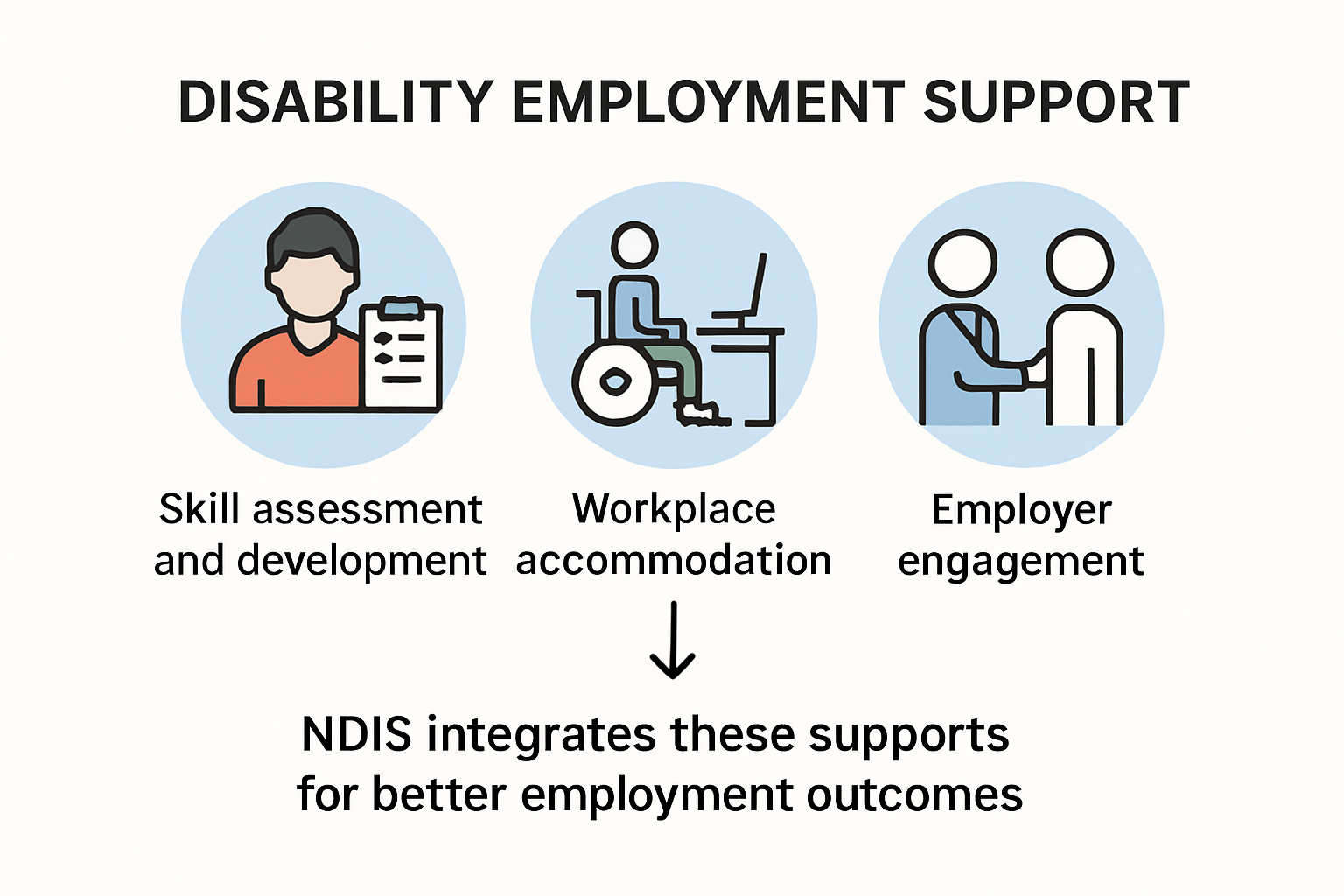
The Australian Government’s Specialist Disability Employment Program, launching in July 2025, represents a significant advancement in disability employment services. This program aims to provide targeted assistance in preparing individuals with disabilities for meaningful employment, focusing on personalized support strategies that recognize each participant’s unique strengths and potential.

Key components of disability employment support include:

  • Skill Assessment and Development: Comprehensive evaluations of individual capabilities and targeted training programs
  • Workplace Accommodation Support: Assistance in adapting work environments to meet specific needs
  • Employer Engagement: Strategies to connect skilled candidates with inclusive employers

To clarify the key components of disability employment support, the following table organises each component with its primary purpose, helping readers quickly grasp their significance.

Component Purpose
Skill Assessment and Development Evaluate abilities and provide targeted training
Workplace Accommodation Support Adapt work environments for individual needs
Employer Engagement Connect skilled candidates with inclusive employers

NDIS and Employment Support Framework

The NDIS provides a structured approach to supporting employment goals for participants. According to the NDIS Participant Employment Strategy 2024-2026, the scheme focuses on creating holistic support mechanisms that extend beyond traditional employment services.

This strategy recognizes that employment support is not just about finding a job but creating sustainable, meaningful work experiences. The framework includes capacity building supports that help participants develop:

  • Professional communication skills
  • Self-management capabilities
  • Confidence in workplace interactions
  • Technical and soft skills relevant to various industries

The Disability Employment Centre of Excellence, established in March 2025, will further enhance these support mechanisms by providing specialized resources and training programs. This initiative aims to improve the quality and effectiveness of employment services for people with disabilities, ensuring more comprehensive and targeted support.

Understanding disability employment support requires recognizing the multifaceted nature of workforce participation. It goes beyond simple job placement, focusing on empowerment, skill development, and creating inclusive work environments that value diversity and individual potential.

For individuals with disabilities, these support systems represent more than just employment opportunities they are pathways to independence, personal growth, and meaningful social contribution. The integrated approach of NDIS and specialized employment support services ensures that participants receive comprehensive, personalized assistance tailored to their unique abilities and career aspirations.

Choosing a Registered NDIS Service Provider in Pakenham

Selecting the right NDIS service provider is a critical decision that can significantly impact the quality of support and overall experience for participants with disabilities. In Pakenham, participants have access to multiple registered providers, but understanding how to choose the most suitable option requires careful consideration and strategic evaluation.

Understanding NDIS Provider Registration

Registered NDIS service providers undergo a rigorous verification process to ensure they meet the highest standards of quality and safety. The NDIS Quality and Safeguards Commission maintains a comprehensive register of providers, offering participants a reliable mechanism to verify credentials and service capabilities.

Key aspects of provider registration include:

  • Compliance with NDIS Quality Standards: Providers must demonstrate adherence to strict operational guidelines
  • Professional Qualification Verification: Ensuring staff have appropriate training and expertise
  • Ongoing Performance Monitoring: Regular assessments to maintain registration status

Evaluating Provider Suitability for Your Needs

Choosing a provider goes beyond basic registration. The NDIS provider finder tool allows participants to search for providers based on specific location and service requirements. When evaluating potential providers in Pakenham, consider the following critical factors:

  • Specialization in specific disability support areas
  • Experience working with participants with similar needs
  • Proximity and accessibility of service delivery
  • Flexibility in service approach
  • Communication and responsiveness
  • Cultural competence and understanding of individual requirements

Participants with agency-managed funding must select registered providers, making this selection process particularly important. The NDIS guidelines recommend a comprehensive approach to provider selection that prioritizes individual participant goals and support needs.

When navigating provider options, participants should schedule initial consultations to assess compatibility. This allows for direct interaction, enabling a more nuanced understanding of the provider’s approach, communication style, and potential alignment with personal support objectives.

Technological integration and service innovation have become increasingly important in disability support. Providers who demonstrate adaptability, leverage modern communication tools, and offer comprehensive support strategies are often more effective in meeting participant needs.

Additionally, participants should consider the provider’s approach to participant-centered planning. The most effective providers view their role as collaborative partners, working closely with participants to develop personalized support strategies that empower individual growth and independence.

Ultimately, choosing a registered NDIS service provider in Pakenham is a personal journey that requires careful research, thoughtful consideration, and a focus on finding a provider who can genuinely support your unique goals and aspirations. By approaching the selection process systematically and prioritizing individual needs, participants can find a service provider that offers not just support, but a pathway to enhanced quality of life.

How Employment Support Empowers Those with Disabilities

Employment Support Empowers

Employment support for individuals with disabilities represents far more than job placement it is a transformative pathway to personal empowerment, economic independence, and social inclusion. These specialized support systems create opportunities that enable individuals to showcase their unique talents, build professional capabilities, and challenge societal perceptions about disability and workplace potential.

Holistic Empowerment Through Professional Development

Employment support goes beyond traditional job search strategies, focusing on comprehensive skill development and personal growth. Research from employment disability studies demonstrates that targeted educational and vocational interventions can significantly increase employment rates and weekly earnings for individuals with intellectual disabilities.

Key dimensions of empowerment include:

  • Skills Enhancement: Tailored training programs addressing individual strengths
  • Confidence Building: Structured support to overcome workplace challenges
  • Independent Living: Economic opportunities that reduce dependency on social support systems

To help readers easily compare the empowerment benefits of employment support, the following table summarises the key dimensions and their described impact.

Empowerment Dimension Impact
Skills Enhancement Tailored training increases professional abilities
Confidence Building Structured support overcomes workplace challenges
Independent Living Economic opportunities promote self-sufficiency

Breaking Barriers Through Inclusive Employment Strategies

Company-driven disability diversity initiatives play a crucial role in transforming workplace environments. According to multi-case industry research, organizations that implement inclusive hiring practices create meaningful employment pathways that recognize and value diverse capabilities.

Supported employment programs have demonstrated remarkable effectiveness in helping individuals with intellectual and developmental disabilities achieve sustainable employment. A comprehensive review of employment services revealed that structured support significantly improves job placement and long-term retention rates.

The empowerment process involves multiple interconnected strategies:

  • Identifying individual strengths and potential career paths
  • Providing workplace accommodation and adaptation support
  • Developing communication and social interaction skills
  • Creating personalized professional development plans

Beyond economic benefits, employment support offers profound psychological and social advantages. It enables individuals to develop a sense of purpose, contribute meaningfully to society, and challenge prevailing misconceptions about disability.

Successful employment support recognizes that disability is not a limitation but a different approach to experiencing and interacting with the world. By creating inclusive environments that value diverse talents and perspectives, these programs transform traditional workplace dynamics.

For individuals with disabilities, employment is more than a job it is an opportunity to demonstrate resilience, capability, and potential. Each professional achievement becomes a powerful statement challenging societal barriers and expanding understanding of human capability.

The future of disability employment support lies in continued innovation, personalized approaches, and a fundamental shift in how we perceive workplace diversity. By investing in comprehensive support systems, we create pathways that empower individuals to pursue their professional aspirations, contribute their unique skills, and build fulfilling careers.

Long-Term and Mental Health Disability Support Options

Long-term disability support and mental health services represent critical components of comprehensive care for individuals facing ongoing challenges. These specialized support options go beyond temporary interventions, offering sustained strategies that address complex, persistent needs while promoting individual autonomy and quality of life.

Comprehensive Mental Health Employment Support

Mental health disability support requires nuanced, adaptive approaches that recognize the unique challenges individuals face in maintaining consistent employment. Research from the American Journal of Psychiatry highlights the profound impact of evidence-based supported employment services, demonstrating that participants receiving targeted interventions were almost three times more likely to secure and maintain employment over a 13-year period.

Key strategies for long-term mental health disability support include:

  • Continuous Skills Development: Ongoing training programs that adapt to evolving workplace requirements
  • Psychological Resilience Building: Strategies to manage workplace stress and professional challenges
  • Flexible Accommodation Planning: Personalized workplace support mechanisms

Sustainable Employment and Support Frameworks

Successful long-term disability support transcends traditional employment assistance, integrating holistic approaches that address multiple life dimensions. These frameworks recognize that sustainable employment involves more than job placement it requires comprehensive personal and professional development strategies.

Critical components of sustainable support include:

  • Individualized career counseling
  • Mental health management techniques
  • Workplace adaptation strategies
  • Ongoing professional skill enhancement
  • Emotional and psychological support networks

The complexity of long-term disability support demands a multifaceted approach. Effective programs must simultaneously address professional development, mental health management, and personal empowerment. This integrated strategy helps individuals build resilience, develop coping mechanisms, and create meaningful career trajectories.

Mental health disability support must also recognize the dynamic nature of individual experiences. What works for one person may not be universally applicable, necessitating highly personalized intervention strategies that can adapt to changing personal and professional circumstances.

Economic independence remains a crucial goal for individuals with long-term disabilities. By providing comprehensive support that addresses psychological, professional, and personal challenges, these programs create pathways that enable participants to develop sustainable careers and achieve greater life satisfaction.

The future of disability support lies in recognizing individual potential rather than focusing on limitations. Innovative approaches that combine technological tools, personalized coaching, and flexible workplace accommodations can transform traditional support models, creating more inclusive and adaptive professional environments.

Ultimately, long-term and mental health disability support is about empowerment. It represents a commitment to recognizing individual strengths, providing meaningful opportunities, and supporting personal growth across professional and personal domains. By investing in comprehensive, person-centered support strategies, we can create more inclusive societies that value diversity and individual potential.

Frequently Asked Questions

What is the Specialist Disability Employment Program?

The Specialist Disability Employment Program, launching in July 2025, aims to provide targeted assistance to individuals with disabilities, helping them prepare for meaningful employment and focusing on personalised support strategies.

How can I choose a registered NDIS service provider in Pakenham?

To select a registered NDIS service provider in Pakenham, consider their specialisation, experience, service delivery approach, and compatibility with your individual needs. Use the NDIS provider finder tool for assistance.

What does disability employment support include?

Disability employment support includes skill assessment and development, workplace accommodation support, and employer engagement strategies to connect individuals with inclusive job opportunities.

How does NDIS support mental health and long-term disability?

NDIS offers comprehensive mental health and long-term disability support through tailored programs that focus on sustainable employment, ongoing skill development, and psychological resilience to help individuals maintain consistent employment.

Ready to Make Disability Employment in Pakenham Work for You?

If you find yourself facing obstacles as you search for meaningful work in Pakenham, you are not alone. This article discusses barriers like complex NDIS processes, skills development, and the need for truly personalised support. Many people want more than just job placement; they want a provider who understands employment goals, mental health, and long-term independence. At Rise2Shine Care, our team specialises in tailored NDIS support that helps you move from challenge to achievement, working with you every step of the way.

https://rise2shinecare.com.au

Take that first step toward a brighter future. Explore how Rise2Shine Care delivers individualised disability employment support in Pakenham, focusing on professional development, workplace confidence, and real job outcomes. Book your free consultation with our local team today and discover care solutions designed for your needs. Your new chapter is just one conversation away. Visit our website now to get started.


Independent Living

Supported Independent Living is changing the way people with disabilities experience independence in Pakenham, and the difference is real. The area now provides access to specialised NDIS providers with personalised support plans, putting individual goals front and centre for every participant. Most would expect disability support to focus mainly on daily care and routines, but the real surprise is how these services actually open doors to confidence, skill building, and stronger community ties. The biggest shift is not about ticking boxes on a care checklist but about helping people steer their own lives, backed by a local NDIS network committed to personal growth and self-direction.

Table of Contents

Quick Summary

Takeaway Explanation
Supported Independent Living empowers autonomy This model provides tailored support, enabling individuals with disabilities to enhance self-management skills and personal independence.
NDIS participants can access personalized services Pakenham offers specific local NDIS services that focus on creating tailored support plans to meet individual needs and goals.
Choosing the right NDIS provider is crucial Registered providers meet strict quality standards, ensuring safe and effective support. Select a provider that aligns with personal values and needs.
Holistic support improves quality of life Supported Independent Living promotes skill development, social connections, and emotional resilience, enhancing overall well-being and independence.
Community engagement is vital for growth Participation in social activities builds relationships, reduces isolation, and fosters confidence among individuals with disabilities.

What Is Supported Independent Living?

Supported Independent Living (SIL) represents a transformative approach to disability support that empowers individuals with disabilities to live more autonomously while receiving personalised assistance tailored to their unique needs. This comprehensive model goes beyond traditional care strategies by focusing on enabling participants to develop critical life skills, maintain independence, and actively participate in their community.

Infographic explaining supported independent living benefits and features

Understanding the Core Principles

Personalised Support Framework is at the heart of supported independent living. Research from the National Disability Insurance Scheme indicates that SIL is designed to provide flexible, individualised support that adapts to each participant’s specific requirements. Unlike one size fits all approaches, SIL recognises that every person has distinct goals, challenges, and aspirations.

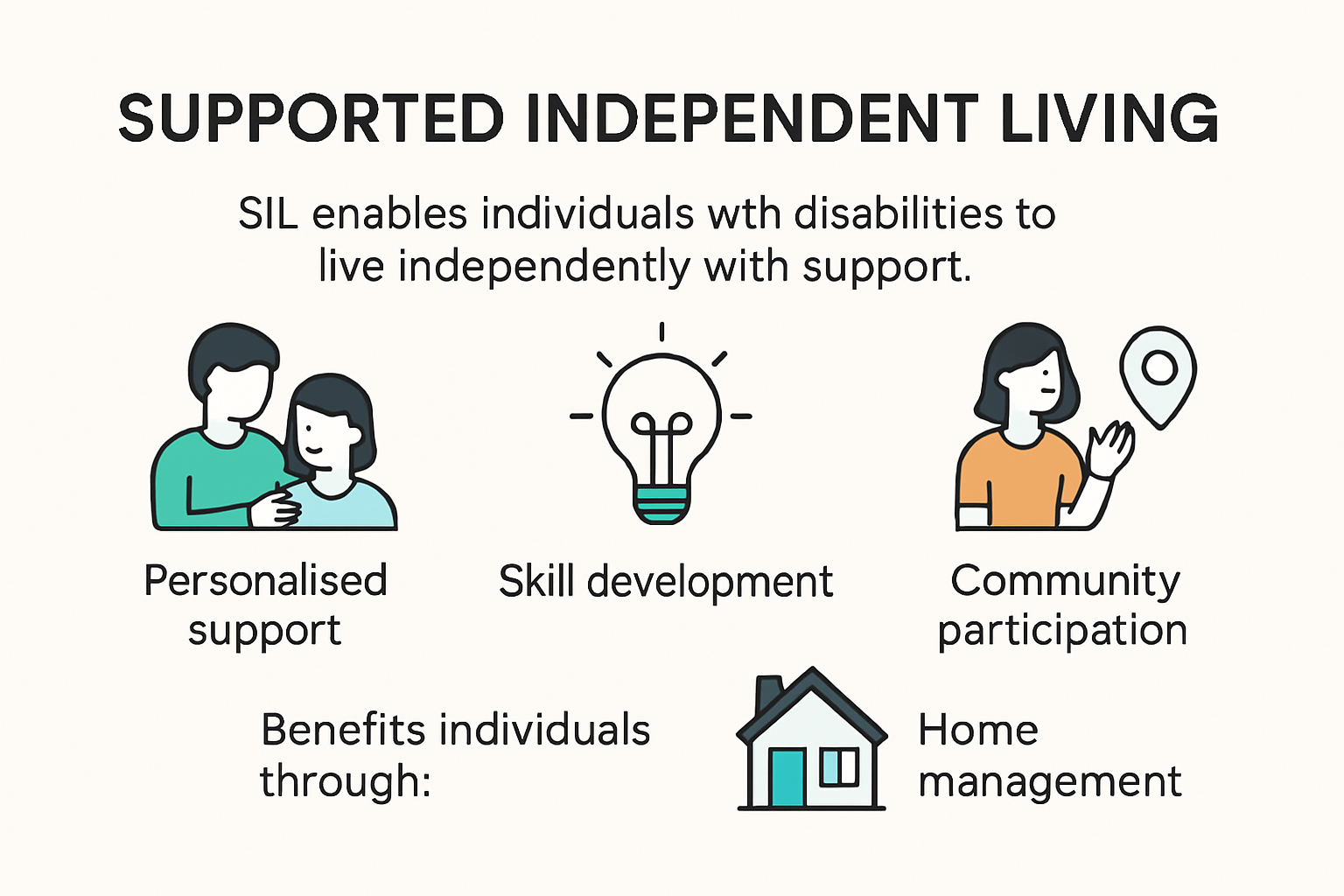
The primary objective of supported independent living is to help participants develop skills that enhance their capacity for self management. This might include assistance with daily tasks such as personal care, meal preparation, household management, financial planning, and community engagement. By providing targeted support, SIL enables individuals to progressively build confidence and capabilities.

Key Components of Supported Independent Living

According to research published in the Journal of Intellectual Disabilities, SIL services typically encompass several critical support domains:

  • Personal Care Support: Assistance with daily personal hygiene, dressing, mobility, and health management
  • Skill Development: Targeted training to enhance life skills, social interactions, and personal independence
  • Community Participation: Support in accessing local services, engaging in social activities, and building meaningful connections
  • Home Management: Help with cleaning, cooking, budgeting, and maintaining a safe living environment

These comprehensive supports are carefully designed to respect individual autonomy while providing the necessary assistance to help participants thrive. The ultimate goal is not just to provide care, but to empower individuals to lead fulfilling, self directed lives with dignity and purpose.

For participants in the National Disability Insurance Scheme (NDIS), supported independent living represents a pathway to greater personal agency. It acknowledges that disability does not define a person’s potential, but rather presents an opportunity to develop unique strengths and capabilities through targeted, compassionate support.

Each SIL plan is meticulously crafted to align with the participant’s specific goals, taking into account their personal preferences, existing capabilities, and long term aspirations. This person centred approach ensures that support is not just about managing daily tasks, but about creating meaningful opportunities for growth, learning, and genuine community inclusion.

Support worker and person with disability preparing meal as life skill

NDIS and Supported Living in Pakenham

Pakenham offers a unique landscape for National Disability Insurance Scheme (NDIS) participants seeking supported independent living services, with specialized local resources designed to meet diverse community needs. According to the NDIS Local Area Coordinator information, the Latrobe Community Health Service operates the local NDIS partner office at 48 John Street, providing critical support for participants navigating disability services in the region.

Local Support Infrastructure

The Pakenham disability support ecosystem is characterized by a comprehensive network of service providers and community resources dedicated to empowering individuals with disabilities. Research from the National Disability Insurance Scheme indicates that SIL funding in this area focuses on helping participants develop critical life skills and maintain maximum independence.

Key characteristics of NDIS supported living services in Pakenham include:

  • Personalized Support Plans: Tailored approaches that address individual participant needs and goals
  • Local Provider Network: Multiple registered disability support organizations operating within the Pakenham area
  • Skill Development Programs: Targeted interventions designed to enhance personal autonomy
  • Community Integration Initiatives: Support mechanisms facilitating social participation and engagement

Accessing NDIS Supported Living Services

Participants in Pakenham can access supported independent living services through a structured process involving assessment, planning, and service coordination. The local NDIS office assists individuals in understanding their funding options and connecting with appropriate support providers.

The process typically involves:

  1. Initial consultation with a Local Area Coordinator
  2. Comprehensive needs assessment
  3. Development of a personalized support plan
  4. Selection of suitable support providers
  5. Regular plan reviews and adjustments

To help clarify the steps involved in accessing Supported Independent Living services in Pakenham, here’s a table summarising the standard process participants can expect:

Step Description
1 Initial consultation with a Local Area Coordinator
2 Comprehensive needs assessment
3 Development of a personalised support plan
4 Selection of suitable support providers
5 Regular plan reviews and adjustments

Unique to the Pakenham region is the collaborative approach between NDIS participants, local health services, and disability support organizations. This integrated model ensures that individuals receive holistic, responsive support that adapts to their evolving needs.

For Pakenham residents, supported independent living represents more than just a service it is a pathway to enhanced personal agency, skill development, and community participation. The local NDIS infrastructure is committed to providing flexible, person centered support that respects individual dignity and promotes meaningful life experiences.

Navigating NDIS services can feel complex, but Pakenham offers a supportive environment with dedicated professionals ready to guide participants through every stage of their supported living journey. The emphasis remains on empowering individuals to build skills, maintain independence, and achieve their personal goals with confidence and dignity.

Choosing a Registered NDIS Service Provider

Selecting the right NDIS service provider is a critical decision that directly impacts the quality of support and overall experience for participants seeking supported independent living. According to the NDIS Quality and Safeguards Commission, registered providers must meet stringent quality standards that ensure participant safety, competence, and professional service delivery.

Understanding Provider Registration

Registered NDIS providers undergo a comprehensive verification process that goes beyond standard employment checks. The NDIS guidelines outline specific criteria that providers must meet, including:

  • Professional Qualifications: Demonstrated expertise in disability support services
  • Safety Standards: Comprehensive background checks and ongoing safety monitoring
  • Quality Assurance: Regular assessments and compliance with national disability support standards
  • Participant Focused Approach: Commitment to individualised, person centered support

The following table summarises the main registration requirements and criteria for NDIS providers, making it easier to compare key aspects:

Registration Criteria Description
Professional Qualifications Providers must show expertise in disability support services
Safety Standards Undergo background checks & ongoing safety monitoring
Quality Assurance Regular assessments; must comply with national standards
Participant Focused Approach Commitment to person-centered and individualised support

Key Considerations in Provider Selection

When evaluating potential NDIS service providers, participants should consider several crucial factors. For those who are self managing their plan, the NDIS provides guidance on provider selection, emphasizing the importance of:

  1. Verifying provider registration status
  2. Checking professional credentials
  3. Understanding the scope of available services
  4. Assessing compatibility with personal support needs
  5. Reviewing communication and responsiveness

Participants should also prioritize providers who demonstrate flexibility, cultural sensitivity, and a genuine commitment to supporting individual goals. This means looking beyond basic service provision to find providers who truly understand the unique journey of each participant.

In Pakenham, the local disability support ecosystem offers multiple registered providers, each with unique strengths and specializations. The key is to find a provider that not only meets technical requirements but also aligns with the participant’s personal values, communication style, and specific support needs.

The selection process should be collaborative and transparent. Participants are encouraged to ask detailed questions, request service previews, and discuss potential support strategies. This approach ensures that the chosen provider can genuinely support the participant’s journey towards greater independence and personal growth.

Ultimately, choosing a registered NDIS service provider is about finding a trusted partner who can support your individual path to independence. The right provider will not just offer services, but will work collaboratively to help you achieve your personal goals, build essential life skills, and create meaningful opportunities for community engagement and personal development.

Benefits for People with Permanent Disabilities

Supported Independent Living (SIL) offers transformative benefits for individuals with permanent disabilities, addressing complex support needs while promoting personal autonomy and quality of life. Research published in the Disability and Health Journal demonstrates that comprehensive support services significantly enhance social inclusion and psychological well-being for participants with permanent disabilities.

Holistic Personal Development

The NDIS framework recognizes that individuals with permanent disabilities require nuanced, person centered support strategies. Benefits extend far beyond basic care, focusing on empowering participants to develop critical life skills, build confidence, and pursue personal aspirations. These support mechanisms are designed to address individual challenges while highlighting unique strengths and capabilities.

Key developmental benefits include:

  • Skill Acquisition: Targeted training in personal management, communication, and daily living skills
  • Social Connection: Structured opportunities for community engagement and relationship building
  • Emotional Resilience: Professional support in developing coping strategies and self advocacy skills
  • Personal Agency: Comprehensive assistance that prioritizes individual choice and self determination

Long Term Quality of Life Improvements

Supported independent living services provide comprehensive advantages that contribute to sustained personal growth and community participation. These benefits are not merely transactional but represent a holistic approach to disability support that recognizes each participant’s inherent dignity and potential.

Participants typically experience:

  1. Enhanced personal independence
  2. Reduced social isolation
  3. Improved mental health outcomes
  4. Greater educational and employment opportunities
  5. Increased self confidence and personal satisfaction

The NDIS support model acknowledges that permanent disabilities do not define an individual’s capacity for achievement. Instead, these services are strategically designed to provide tailored assistance that adapts to evolving personal goals and circumstances.

Moreover, supported independent living recognizes the profound psychological impact of comprehensive, compassionate support. By offering personalized strategies that respect individual preferences and aspirations, these services help participants develop a positive self image and challenge societal perceptions about disability.

Ultimately, the benefits of supported independent living extend beyond immediate practical assistance. These services represent a fundamental commitment to human dignity, offering individuals with permanent disabilities the tools, resources, and support necessary to live fulfilling, self directed lives. Each participant’s journey is unique, and the NDIS framework is designed to celebrate that individuality through flexible, responsive, and person centered support strategies.

Frequently Asked Questions

What is Supported Independent Living (SIL)?

Supported Independent Living (SIL) is a personalised disability support model designed to empower individuals with disabilities to maintain autonomy while receiving tailored assistance to develop life skills and engage with their community.

How can I access NDIS Supported Living services in Pakenham?

To access NDIS Supported Living services in Pakenham, you typically go through a process that includes an initial consultation with a Local Area Coordinator, a needs assessment, and the creation of a personalised support plan.

What should I consider when choosing an NDIS service provider in Pakenham?

When selecting an NDIS service provider, consider their registration status, expertise in disability support, compatibility with your needs, and their approach to individualised, person-centred care. Communication and responsiveness are also vital.

What are the benefits of Supported Independent Living for people with permanent disabilities?

Supported Independent Living services promote skill development, social connections, and emotional resilience, leading to enhanced personal independence, reduced isolation, and improved overall quality of life.

Experience Real Independence with Personalised NDIS Support in Pakenham

Have you been searching for truly personalised Supported Independent Living that goes beyond everyday assistance and helps you build real skills for life? Many in Pakenham are looking for NDIS solutions that actually empower choice, promote confidence and create stronger community connections. If you feel overwhelmed by generic providers or feel your individual needs are not being recognised, now is the perfect time to demand support that puts your personal goals first. Discover the local expertise and compassionate approach that makes Rise2Shine Care stand out for Supported Independent Living.

https://rise2shinecare.com.au

Rise2Shine Care specialises in tailored NDIS services for Pakenham residents. Our team listens to what you want, adapts to your changing needs and helps you reach new levels of independence. If you are ready to benefit from individualised plans and trusted support, visit Rise2Shine Care today or call us for a free consultation. Get started today so you can secure priority access to your own personalised Supported Independent Living plan for 2025.


Assistance with Personal Activities in Pakenham

Assistance with Personal Activities in Pakenham: What’s Funded and What’s Not?

When you are just getting started with the National Disability Insurance Scheme (NDIS), everything can feel a bit confusing, especially when you’re trying to understand what supports are covered and which ones are not. If you are living in Pakenham and wondering about assistance with personal activities in Pakenham, then you are not alone. Many NDIS participants ask this very question: “What kind of everyday help can I actually get funding for?”

So, let us explain everything properly using simple language and practical examples. Whether you are planning your first NDIS meeting or reviewing your current plan, this blog will help you understand what is possible and what is not when it comes to personal support.

What is Assistance with Personal Activities in Pakenham

What Does ‘Assistance with Personal Activities’ Mean?

In NDIS terms, “assistance with personal activities” refers to the supports that help you with the essential daily tasks you need to live life with comfort, and independence.

These supports for daily living in Pakenham are often funded under your Core Supports budget, specifically under the support category: Assistance with Daily Life.

This usually includes help with:

  • Showering or bathing
  • Dressing and grooming
  • Using the toilet
  • Getting in and out of bed
  • Meal preparation and feeding
  • Moving around the house safely

The goal is to support your independence while respecting your routine, choices, and preferences. It’s not just about getting tasks done; it is more about doing them the way you want and with the right kind of support.

What’s Typically Funded?

Let us talk about what NDIS is likely to fund when it comes to assistance with personal activities in Pakenham.

Assistance with Personal Activities in Pakenham: Funded Services

Support Workers to Help You at Home

The most common type of support is to provide a qualified support worker who can assist with tasks in your home, like helping you get dressed in the morning, preparing your meals, or helping you manage your daily hygiene routine.

Assistance with Personal Activities in Pakenham’s Shared Accommodation

If you live in a group home or supported independent living setting, you can also receive daily personal care, which would be made to fit your needs.

Overnight Support

Suppose your disability requires support overnight, such as assistance with using the toilet or managing anxiety, then this type of care can be included in your plan. Furthermore, having proper overnight support is important to ensure your comfort and safety.

Support During Holidays or Short Stays (Break)

So, the personal care services for NDIS participants do not stop when you are away from home. If you go on a short break, your personal care needs can still be funded during that time.

Training to Become More Independent

You can also receive support to learn how to do certain personal activities more independently. For example, if you are working on meal prep skills or managing your hygiene alone

What is Not Funded Under ‘Assistance with Personal Activities in Pakenham’?

While the NDIS offers a wide range of services, there are some clear limits on what it will fund. If you are clear about these from the start, you can help prevent any unexpected issues later on.

Assistance with Personal Activities in Pakenham: Services that are excluded from funding

Here’s what usually is not covered:

Medical or Nursing Services

The NDIS does not cover medical services. So, if you need things like wound care, injections, or someone to give you medication, that is usually paid for by the health system, not the NDIS. However, in some cases, if your daily support needs include health monitoring, there may be special arrangements to include it in your plan.

Tasks Outside the Personal Care Category

House cleaning, gardening, or grocery shopping are not considered personal care; those fall under other support categories like Household Tasks or Community Participation, which may or may not be included in your plan.

You can check with your NDIS provider in Pakenham to see whether they provide community participation.

Support Not Related to Your Disability

The NDIS only funds support that is directly related to your disability. The scheme exists to provide everyday assistance for people with disabilities, helping them manage their daily tasks easily and independently.

Henceforth, if you are requesting help with something that does not fit with your disability needs (e.g., a haircut or buying clothes), it might not be covered.

Informal Supports Provided by Family

NDIS does not usually pay your family to help with personal activities. So, informal support is considered separate from funded support.

How Does Funding Work in Practice?

Now that you know what’s in and what’s out, you might be asking: “How do I actually get these supports in my plan?”

Common NDIS Funding Process

Here’s how it normally works:

  • During your NDIS planning meeting, you (or your nominee) will talk about your daily needs.
  • If you require assistance with personal tasks, the planner will assess whether this support is reasonable and necessary based on your disability.
  • If approved, the funding will appear under your Core Supports, and you’ll be able to use it to hire a registered or unregistered NDIS provider in Pakenham.
  • You can choose who supports you and when they will be paid from your budget, as long as the tasks are within scope.

It is also important to note: If you are plan-managed or self-managed, you can use both NDIS-approved care providers in Pakenham and the non-registered ones. If you are NDIA-managed, you will need to choose from registered providers only.

Some Tips for Making the Most of Your Funding

To make sure you are properly using your budget for assistance with personal activities in Pakenham, here are a few helpful tips:

Work with a Trusted Local Provider

You can choose a provider in Pakenham who understands your personal goals, not just your plan. Ultimately, having someone you can trust makes a big difference.

Set a Daily Routine Together

You should talk with your support worker to create a routine that matches your life. Whether you need support in the morning or evening with meal preparation, personal grooming, or something else, it’s completely your choice.

Keep Good Records

If you are self-managed, keeping receipts and service agreements is important. Even if you are not, tracking your support hours helps avoid budget surprises.

Review Your Plan Regularly

Your needs might change, so reviewing your plan yearly will be an easy way to make sure you are getting the right level of individual daily care under NDIS.

How to Track Your Progress in Personal Activities

Monitoring your progress helps you make the most of your NDIS support and ensures your independence continues to grow. Here are some simple ways to track your achievements:

  • Log Daily Skills: Keep a brief record of tasks you’re learning or completing independently, such as meal prep, dressing, or personal hygiene.
  • Celebrate Milestones: Recognize improvements, even small ones, to stay motivated and show your progress at plan reviews.
  • Review Goals Regularly: Compare your current abilities to the goals set in your NDIS plan and adjust support if needed.
  • Share Feedback with Your Support Worker: Regular discussions with your support worker help fine-tune your support to suit your evolving needs.

Let’s Talk About Pakenham Specifically

Pakenham has a growing number of NDIS providers offering customized personal activity support. Because it is a growing, community-focused suburb, there is a mix of large registered providers and smaller, participant-led services.

This means you can often find someone who really understands the local lifestyle, whether that is walking around shopping centers, accessing health services nearby, or just understanding your day-to-day needs with a personal, respectful approach.

So, if you are seeking assistance with personal activities in Pakenham, do not settle for a standardized plan. You should choose a service that is made to fit your individual needs instead. Look for service providers who:

  • Regularly match you with the same home and community support worker in Pakenham
  • Have experience with your disability type
  • Can provide flexible hours based on your preferences
  • Are willing to listen and adapt over time

Conclusion: Getting Support That Respects You

Ultimately, getting help with personal activities isn’t just about keeping up with hygiene or daily routines; it is about living your life the way you want to, with the support that feels right for you.

The NDIS has made it possible for many people in Pakenham to receive this support in a way that is fully funded, accessible, and designed for their comfort, not the other way around.

If you are not sure what your plan covers or if you are eligible for more support, reach out to your Local Area Coordinator (LAC) or support coordinator. You can also speak directly with service providers who can help you understand your options before your next plan review.

Your activities are not just tasks; they are a part of your independence, well-being, and dignity. With the right support, you do not just get through the day; you flourish.

FAQs – Assist with Personal Activities in Pakenham

1. Can I get help with personal activities while I’m at work or studying?
Yes, if your NDIS plan includes support during community access or vocational activities, you may be able to receive assistance with personal tasks like toileting or eating during work or study hours.

2. Are there female-only or male-only support workers available for personal care?
Absolutely. You have the right to request a support worker based on your preferences, including gender, especially for personal care tasks. Just let your provider know what makes you feel most comfortable.

3. Can personal activities support be provided outside my home, like at a friend’s place or holiday stay?
Yes, support can be delivered wherever you are, as long as it’s part of your NDIS-approved plan and related to your disability needs. This includes short trips, overnights, or stays at other locations.

4. Is there a minimum number of hours I need to book for personal support each day?
Not necessarily. Many NDIS providers in Pakenham offer flexible shifts, some as short as 30 minutes. It depends on your provider’s policy, your plan, and your needs.

NDIS service in Pakenham

Find the Right NDIS Service for Your Loved One

The National Disability Insurance Scheme (NDIS) is Australia’s support system for people living with permanent and significant disabilities. Its goal is to help individuals achieve greater independence, better social and economic participation, and an overall improved quality of life. Through tailored plans, the NDIS funds necessary services and supports based on each participant’s unique needs and goals. In short, it’s more than a system; it’s a lifeline for many.

This blog is about uncovering that “secret” behind the NDIS Service in Pakenham that make people feel seen, heard, and genuinely cared for.

The Heart of Support in Pakenham

Navigating the National Disability Insurance Scheme can be confusing, especially when all you really want is support that understands your loved one. In Pakenham, many families and individuals who want a place that takes care of their special members find themselves asking, “Isn’t there a better way? A more personal way?” to protect and help them.

Here’s the good news, there is a better way and it’s closer than you think. Some NDIS service providers are doing things differently. They’re offering more than just support plans and paperwork. They’re creating connections and showing up like family.

The heart of this approach is person-centered care, where your voice matters and is equally important, your goals take center stage, and the support feels real.

What Does “Family-Like” Support Actually Mean?

1. Genuine Connection

Support shouldn’t feel like a transaction and yet, sometimes it does. When providers treat people like just another number, it’s easy to feel overlooked. But here’s the thing: when support workers genuinely care, everything starts to feel different.

The most trusted NDIS service in Pakenham are the ones where staff really take the time to get to know you. They ask how your day’s going, remember the little things (like your dog’s name), and show up with heart not just a checklist. That’s when it stops feeling like “support” and starts feeling like a team.

2. Active Listening and Understanding

It’s more than just acknowledging and smiling. Active listening means truly hearing what you’re saying, and sometimes, what you’re not. It’s about understanding your goals, worries, quirks, and dreams. When support workers take the time to listen on that level, they can respond with care that actually fits your life. That’s why the most trusted disability service providers know that genuine understanding always leads to better support.

3. Empathy and Compassion

NDIS support isn’t just about logistics. It’s about people. And empathy real, felt empathy makes all the difference. When support workers approach their job with kindness and care, it fosters a deeper connection. It’s the kind of compassion that says, “I’m here with you, not just for you.”

4. Consistency and Reliability

Moreover, imagine seeing a new face every week. It’s hard to feel safe or understood that way. One of the things that makes support feel like family is knowing who will walk through your door. Consistency in support teams is something that many top NDIS providers prioritize, as it helps build trust and routine. You get to know your team, and they get to know you.

What Makes NDIS Service in Pakenham Feel Like Family?

Let’s break down what really sets these services apart the things that make them feel less like formal support and more like genuine connection.

  • Person-Centered Approach

Saying “person-centered” is easy. However, living it? That’s where the magic happens. In Pakenham, great NDIS providers shape supports around you. Whether that means changing shift times to suit your routine or helping you join activities you actually care about, the plan is built for you, not the other way around.

  • Open and Honest Communication

Trust starts with being honest. Good providers keep communication clear and real. They check in regularly, are upfront when things don’t go perfectly, and always make space for your voice. You’re not just a participant; you’re part of the conversation.

  • Building Trust and Rapport

Trust isn’t built in a day. It takes consistency, patience, and showing up. When support workers remember the little things, follow through on promises, or simply show they care, it creates a bond. That kind of connection makes all the difference.

  • Going the Extra Mile

It’s often the small gestures that stay with you, like a support worker remembering your birthday or staying late so you don’t miss an event you were excited about. Consequently, these moments show heart and turn service into something more meaningful.

  • Community Integration Focus

The best support doesn’t stop at your front door. Moreover, NDIS services with a community focus help you feel connected to what’s happening around you, whether that’s joining a local group, attending events, or just being out and about in Pakenham. It’s about belonging, not just receiving care.

Why This “Family Feel” Matters in NDIS Services

1. Stronger Family Involvement

When the whole family is involved and welcomed in the support journey, everyone benefits. Collaboration becomes easier, tensions lessen, and the participant feels more surrounded by care. NDIS Service in Pakenham that nurture these family ties often see the most sustainable, positive outcomes.

2. Improved Well-being and Outcomes

When people feel heard, respected, and supported, they begin to grow and feel empowered. As a result, emotional and mental well-being improves, and participants often become more engaged and motivated in their day-to-day lives. In other words, feeling valued leads to better outcomes.

3. Increased Confidence and Independence

Support that feels like family is empowering. As a result, it encourages individuals to step out, try new things, and grow into their independence. Furthermore, with the right team behind them, many participants in Pakenham are discovering just how capable they truly are.

4. Greater Sense of Belonging

Belonging is a powerful feeling. When support services bring warmth and inclusivity, participants feel truly connected, not just to their support team, but to the wider Pakenham community. This kind of connection helps individuals feel supported, seen, and part of something meaningful. And that sense of community can make all the difference.

Finding NDIS Service in Pakenham That Prioritize Connection

If you’re looking for that special kind of support in Pakenham, here are some tips:

Ask the Right Questions

  • How do you ensure continuity with support workers?
  • What does person-centered care look like in your service?
  • How do you involve families in the support process?
  • Can I meet the team before committing?

Asking thoughtful questions helps you gauge whether a provider truly walks the talk.

NDIS Services in Pakenham: Where Support Meets Every Part of Life

When it comes to finding the right NDIS support, one of the biggest comforts is knowing you don’t have to go from provider to provider just to get what you need. Fortunately, in Pakenham, some services offer a full range of NDIS supports all in one place, making life a whole lot easier for individuals and families alike.

Here’s a simple breakdown of the kinds of services you can expect, designed to support every part of your daily life and long-term goals.

1. Assist with Employment and Education

For those looking to work or study, this service helps with job searching, resume writing, interview preparation, and support while settling into a new role or course.

2. Personal Activities Support (Standard & High Needs)

Need a hand with daily routines? Whether it’s getting dressed, preparing meals, or managing complex health needs, NDIS Service in Pakenham provides caring and respectful help so you can go about your day with comfort and dignity.

3. Travel and Transport Assistance

Getting from A to B shouldn’t be a struggle. This support helps you learn how to use public transport or provides a reliable ride so you can stay connected to appointments, work, or community activities.

4. Community Nursing Care

Health needs are personal, and this service provides professional care from qualified nurses, whether it’s help with medication, wound care, or managing chronic conditions in the comfort of your own home.

5. Daily Tasks & Shared Living

Living with others or independently? This support ensures that your day-to-day needs are met, from cooking to cleaning, so your home life runs smoothly and comfortably.

6. Innovative Community Participation

In addition, this service help you build confidence, learn new skills, and connect with others through creative and engaging programs designed to help you become more involved in your community.

7. Development of Life Skills

Whether it’s managing money, cooking a meal, or handling daily tasks, this service helps you grow more confident and independent in everyday life.

8. Household Tasks

After all, it’s the small things like laundry, dishes, or keeping the house clean that make the biggest difference. Support is available to take the stress out of household chores.

9. Community Participation

Whether it’s joining a local club, attending events, or volunteering, this support encourages and helps you take part in the community in a way that feels right for you.

10. Specialized Disability Accommodation (SDA)

Finding the right home matters. NDIS Service in Pakenham supports participants who need specially designed housing that suits their physical or high-support needs, ensuring safety and comfort.

11. Group and Centre-Based Activities

Make new friends and explore new interests in a group setting. Whether it’s arts, games, or workshops, these programs are a great way to socialize and grow.

12. NDIS School Holiday Program

Keeping kids and teens engaged during school breaks can be a challenge. These structured, fun-filled programs give young participants a chance to learn, play, and connect with others in a safe and supportive environment.

The Importance of Customized Care

Person-centered or customized care ensures that support is tailored to your individual needs and preferences. It’s about empowering you to make informed choices, therefore allowing you to have control over the services you receive.​ NDIS Service in Pakenham offers such care that feels like family and prioritizes connection.

According to the NDIS Practice Standards, providers are required to:​

  • First, Respect your legal and human rights.
  • Additionally, communicate with you in a way that you can understand.
  • Support your engagement with your chosen community.
  • Enable you to make informed decisions about your care.

The Benefits of Person-Centred NDIS Support in Pakenham

A person-centred approach means your loved one is at the heart of every decision. The best NDIS services use this model to:

  • Build confidence and independence.
  • Create flexible plans that adapt to changing needs.
  • Encourage family involvement in decision-making.
  • Promote emotional and mental well-being.
  • Foster inclusion and connection within the local community.

It’s about creating a life that’s not just supported, it’s fulfilling, independent, and meaningful.

Understanding Your Rights and Responsibilities

As an NDIS participant, you have the right to:

  • Choose who delivers your supports.
  • Not use a provider if you feel they aren’t acting in your best interests.
  • Ask if a provider has a conflict of interest.
  • Not feel pressured to buy services or supports you don’t want or need.
  • Pay for supports at a fair and reasonable rate.
  • Decide what personal information you give to a provider.

You’re also responsible for ensuring that the supports you choose are directly related to your disability and align with your NDIS plan.

Recent Changes to NDIS Legislation

In October 2024, new laws were introduced to clarify what NDIS funding can and cannot cover. Participants can now only use their NDIS funds for items listed as NDIS supports. Additionally, all NDIS plans will have a 12-month funding period, with possibility of shorter periods tailored to specific circumstances starting in 2025.

Conclusion

The most trusted NDIS Service in Pakenham aren’t just about ticking boxes; they’re about building real connections. They listen, care, and treat you like part of the family. This kind of support, based on empathy, trust, and consistency, can change everything. It can shift confusion into clarity, making you feel fully supported, not just serviced.

Ready to Find the Right NDIS Service in Pakenham?

Let’s make care personal again. At Rise2Shine Care, we believe support should feel like family – consistent, compassionate, and empowering. Whether you’re looking for daily assistance, community access, or life skill development, our team is here to help you or your loved one thrive.

📞 Call 0493 029 033 or visit 35 Revelstoke Cr, Pakenham VIC 3810 to learn how we can tailor NDIS support to your family’s needs.

Discover NDIS support in Pakenham that feels like family personal, caring, and focused on your goals. Real connection, real support, real you.

Frequently Asked Questions (FAQs)

Q1. What does “person-centred” support mean?
It means your NDIS plan is built around your goals, preferences, and routines, not a standard checklist.

Q2. Can I meet support workers before starting services?
Yes, many Pakenham providers offer “meet and match” sessions so you can choose someone who fits your loved one’s needs and personality.

Q3. What if I’m not happy with my current provider?
You can switch providers anytime. It’s your right to choose who supports you best.

Q4. Are services flexible with timing and support types?
Most providers in Pakenham offer flexible scheduling and can adjust supports as your needs change.

Q5. How do NDIS services help with community involvement?
Providers often organise social outings, skills programs, and local group activities to help participants connect and feel included.